.jpg "Nike Mind 001 'Black' Review: Does Recovery Have Style ?")
When Nike unveiled the Mind 001 in October 2025, they weren't just launching another sneaker—they were introducing a philosophy. Part of Nike's broader "Mind/Body" wellness initiative, this recovery mule promises something rarely found in performance footwear: complete mental and physical rest for your feet. After nearly a decade of neuroscience research at the Nike Sport Research Lab, the Mind platform finally emerged as Nike's first footwear specifically designed to influence brain activity through sensory stimulation. But can a shoe designed for doing nothing look good while doing it ?
I've spent the recent weeks testing the Nike Mind 001 'Black' in various recovery scenarios—post-workout cooldowns, long-haul flights, full days of city walking, and those essential rest days when your body demands comfort above all else. Here's everything you need to know about Nike's most therapeutic footwear yet, including critical sizing information you need before purchasing.
See current pricing and availability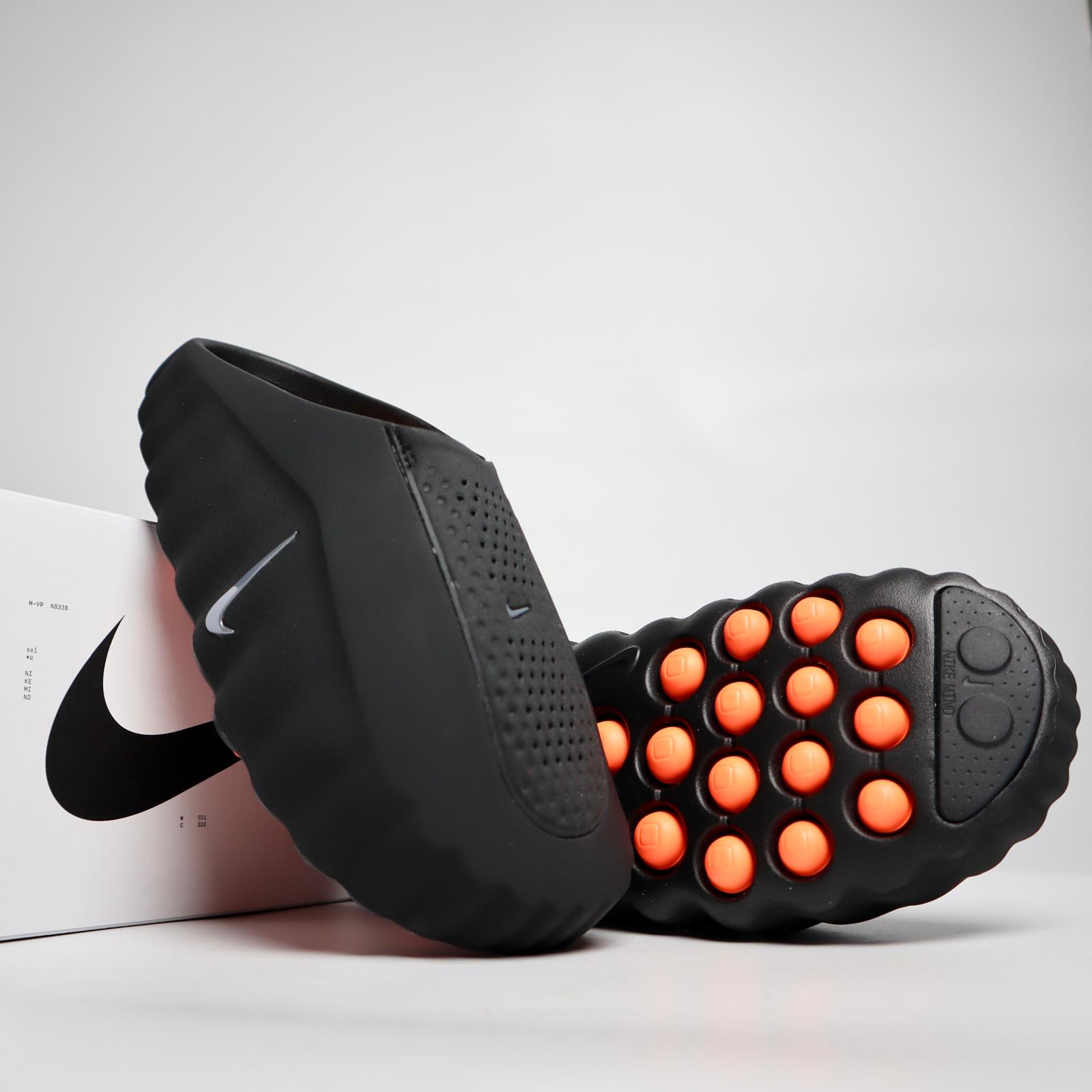
Concept and Design: A Shoe Built for Wellness
The Nike Mind 001 represents a deliberate departure from performance-driven design. Where most Nike footwear optimizes for speed, agility, or support, the Mind 001 prioritizes sensory relief—a concept borrowed from recovery science and therapeutic footwear research.
"Nike Mind is a new sensory-footwear concept that helps reawaken the foot, the body and the mind," explains Eric Avar, VP and Creative Director of Innovation at Nike. "It represents a new paradigm of performance and how we can potentially make athletes better in the future."
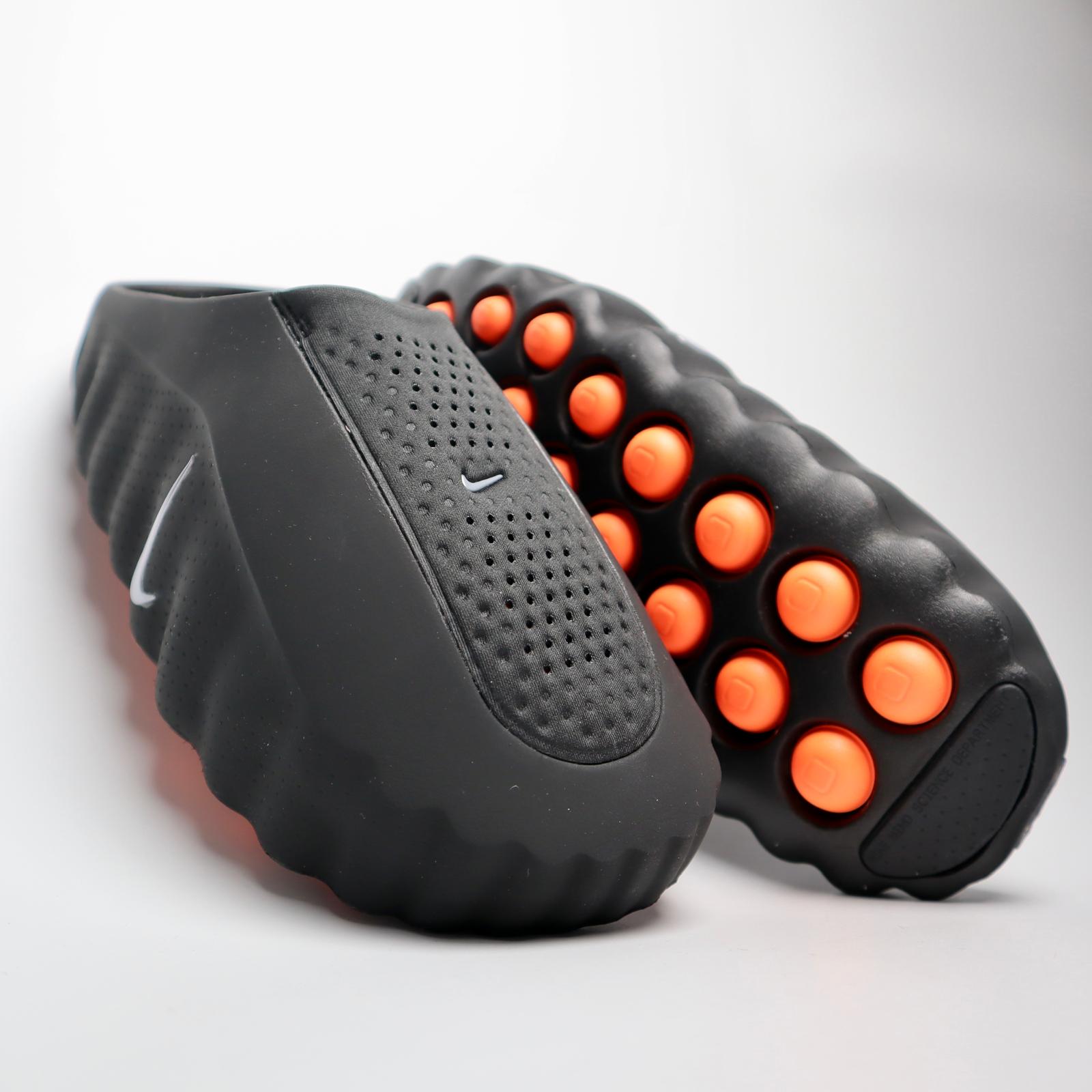
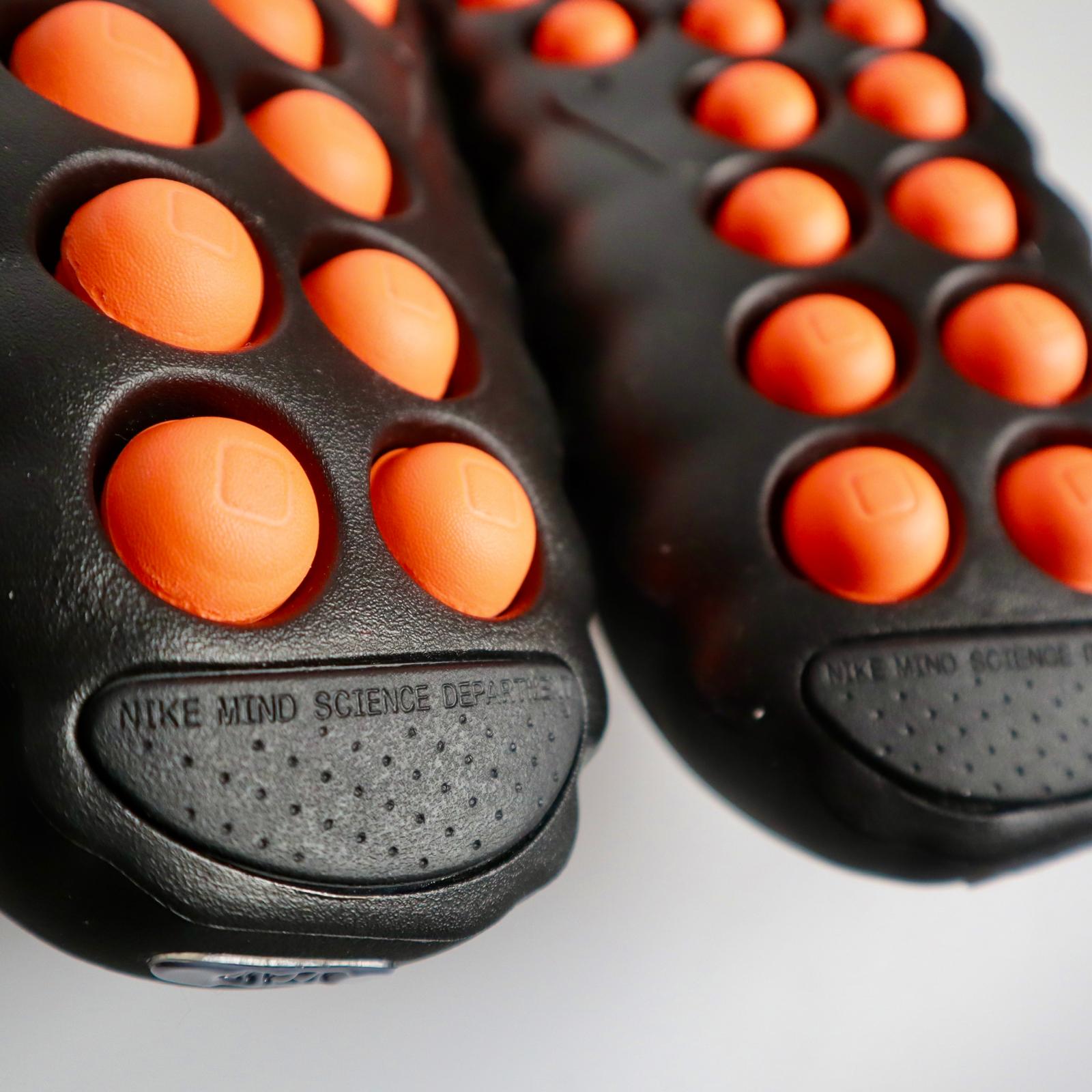
The engineering challenge behind this philosophy took over 10 years to solve. The Mind 001 features 22 independent foam nodes per shoe that function as both pistons and gimbals—they compress vertically and tilt laterally as you move. These nodes are bonded to a flexible, water-resistant material that allows them to act independently, transmitting the texture and sensation of the ground directly beneath your feet.
This isn't coincidental design. Nike's Mind Science Department—a cutting-edge neuroscience research group within the Nike Sport Research Lab—studied how sensory feedback influences brain activity. Using EEG measurements and mobile brain imaging technology, researchers discovered that strategic underfoot stimulation activates key sensory areas of the brain, helping athletes achieve heightened awareness and present-moment focus.
The 22-node configuration emerged from detailed sensory mapping. The skin beneath our feet contains 10 to 20 times more mechanoreceptors than most other body regions, similar to our hands. By measuring what researchers call the "two-point discrimination threshold"—the distance required between two touch points for the brain to perceive them as distinct—Nike's team mapped receptor density across the foot.
This explains the node distribution: more closely spaced at the forefoot where receptor density is highest, more spread out at the heel where sensitivity decreases. Each node's placement corresponds to specific sensory zones that send feedback to the brain about balance, position, and environmental interaction.
The mule silhouette itself serves a recovery-focused purpose. Unlike traditional sneakers that require bending and lacing, the Mind 001 offers easy-on, easy-off convenience crucial when feet are swollen or muscles fatigued. The backless design eliminates heel counter pressure that can restrict blood flow during recovery periods.
The 'Black' colorway specifically supports the therapeutic mission. Dark, monochrome colors reduce visual stimulation—research from Nike's team suggested this helps users mentally transition into rest mode. It's subtle psychological design wrapped in lifestyle packaging.
Technical Construction:
- 22 independent foam nodes acting as pistons and gimbals
- Flexible, water-resistant base material allowing independent node movement
- Node density mapped to foot mechanoreceptor distribution
- Mule construction for easy entry without bending
- Pull-tab system for quick removal
- Strategic perforations aligned with foot thermal regulation zones
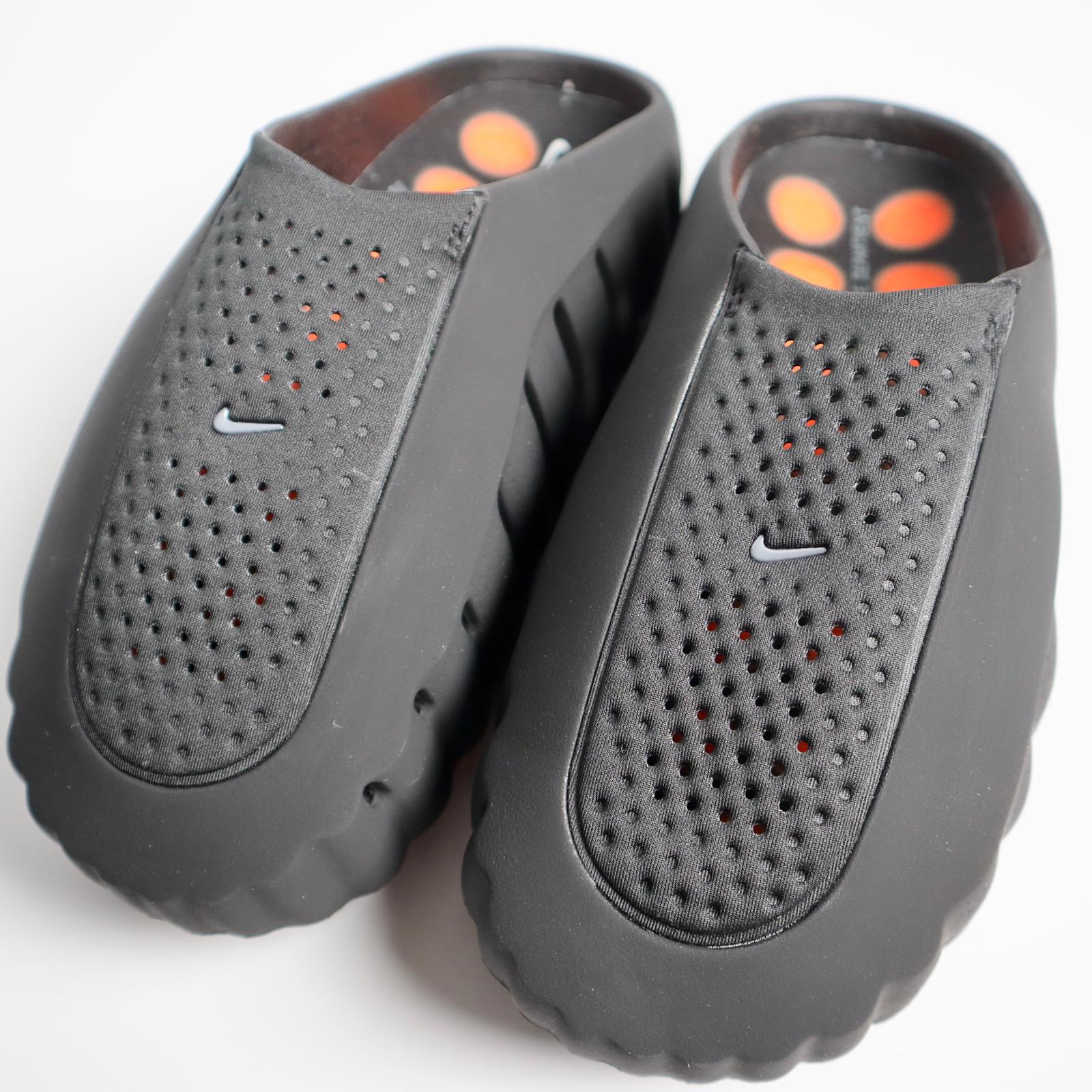
- Knit upper with breathability perforations
- Rubber pods at toe and heel for durable traction
The Mind 001 doesn't look like medical footwear because it isn't—it's therapeutic technology translated into culturally relevant design. This distinction matters. Crocs solved comfort. Slides offered convenience. The Mind 001 attempts both while maintaining social acceptability beyond home environments.
"For 45 years, Nike has studied the body in motion—how muscles fire, how joints move, how oxygen fuels performance," says Dr. Matthew Nurse, VP and Chief Science Officer at Nike. "Now, we're expanding into the mind. By studying perception, attention and sensory feedback, we're tapping into the brain-body connection in new ways. It's not just about running faster—it's about feeling more present, focused and resilient. That's the next frontier of performance."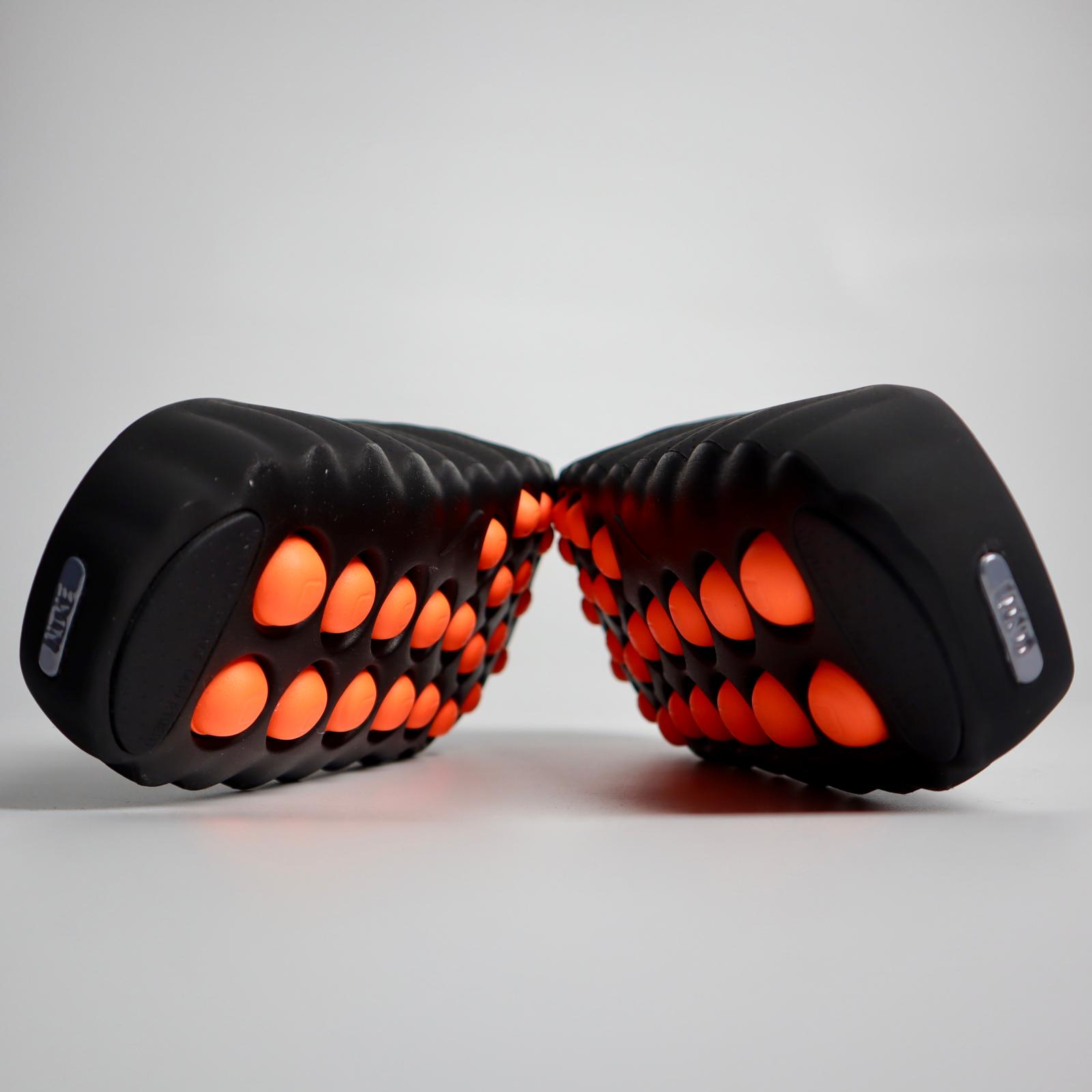
Nike Mind 001 On Feet: The Ultimate Rest Day Look
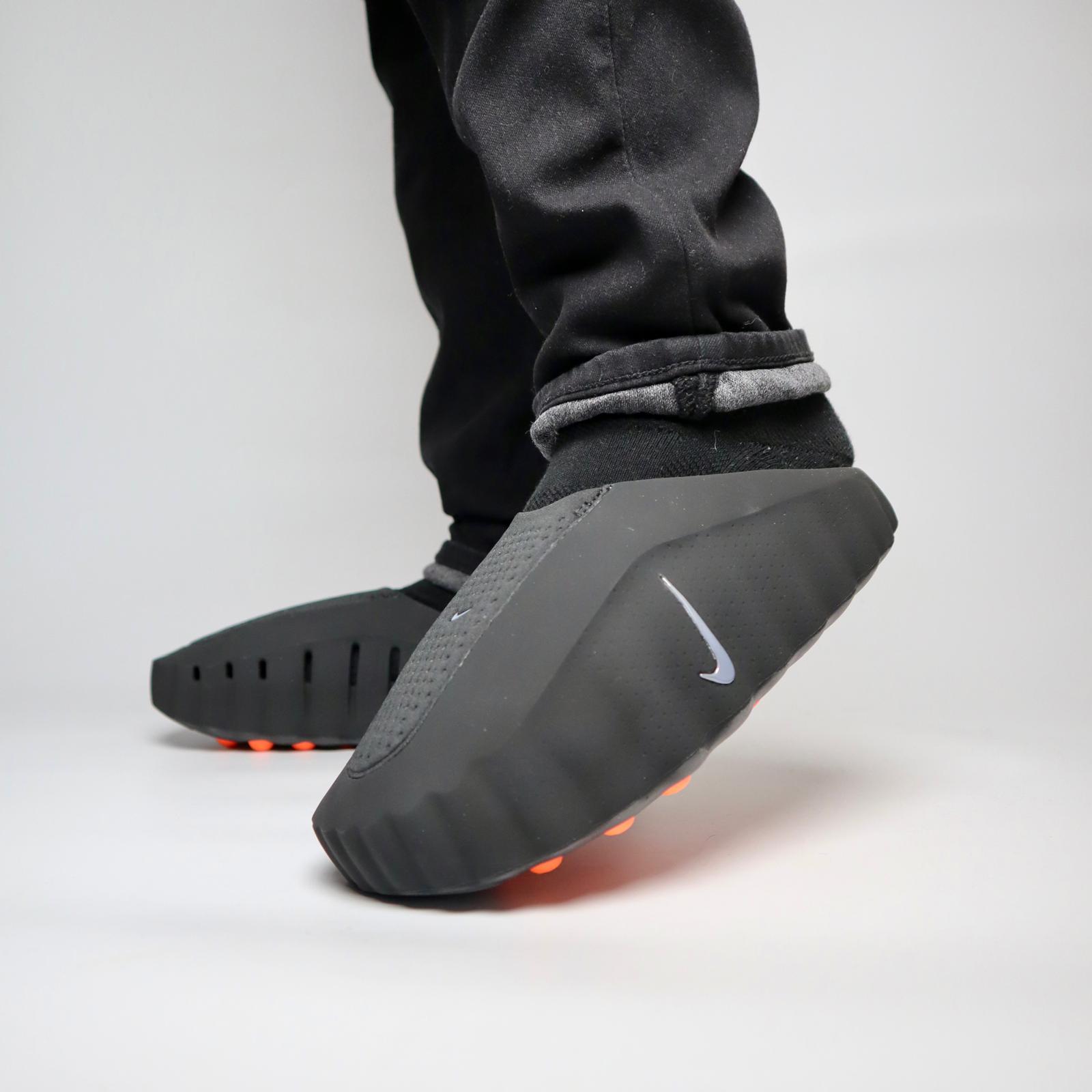
Recovery shoes historically faced one insurmountable problem: they looked medicinal. The Mind 001's mule construction could have amplified this issue—backless footwear often reads as house shoes or post-surgical recovery equipment. Instead, Nike's design team created something that works within contemporary streetwear contexts.
The 'Black' colorway proves essential to this achievement. In monochrome black with minimal branding (just a subtle Swoosh), the Mind 001 reads as intentional minimalist design rather than specialized recovery equipment. The streamlined profile and premium material execution elevate it beyond typical comfort footwear aesthetics.
Post-Workout Recovery
The Mind 001's intended context. Pair with technical joggers and a relaxed hoodie immediately after training sessions. The all-black execution integrates seamlessly with gym-to-street transition outfits without drawing attention to the recovery purpose.
The slip-on construction means no bending over to tie laces when your muscles are fatigued—a practical consideration that becomes genuinely valuable during high-volume training phases. Slide them on, pull the heel tab, and you're ready for cool-down walks or mobility work.
"Focus is everything in football," says Nike athlete Erling Haaland, who tested the Mind platform during its five-year development period with hundreds of other professional athletes. "Every step I take, I think of the shoe and what I feel in my feet—which is a good thing. It helps me to bring balance to my game."
Travel Comfort
Long-haul flights represent the Mind 001's second natural habitat. The flexible upper accommodates foot swelling at altitude without creating trapped sensations, while the mule construction allows easy removal during flights without fumbling with laces in cramped airplane seats.
The black colorway passes all dress codes that reject obvious athletic shoes. They read as minimalist lifestyle footwear, making them appropriate for business casual travel situations where performance running shoes would feel inappropriate.
Urban Minimalism
Pair with cropped trousers and oversized outerwear for intentionally understated urban looks. The Mind 001's lack of prominent branding makes it ideal for fits prioritizing silhouette over logos—the shoe contributes texture and form without visual competition.
The mule silhouette works particularly well in monochrome or tonal outfits where material variation provides interest. Think black-on-black with different textures—matte trousers, technical outerwear, the Mind 001's subtly textured water-resistant upper.
Styling Notes:
- The low construction works best with no-show socks or mid-crew styles
- Avoid athletic leggings—they emphasize the shoe's recovery purpose too overtly
- The streamlined profile pairs well with tapered or cropped pants
- Consider the shoe's horizontal lines when choosing pant breaks
Styling Limitations:
The backless construction creates some practical constraints. The Mind 001 doesn't work for situations requiring secure footwear—active movement, uneven terrain, or formal contexts all expose the mule's limitations. These aren't shoes that adapt to multiple scenarios; they excel within a specific recovery and comfort-focused use case.
The obvious comfort prioritization signals leisure rather than polish. For formal or smart-casual contexts, traditional closed footwear remains more appropriate. The Mind 001's strength lies in making therapeutic comfort socially acceptable, not in replacing conventional dress shoes.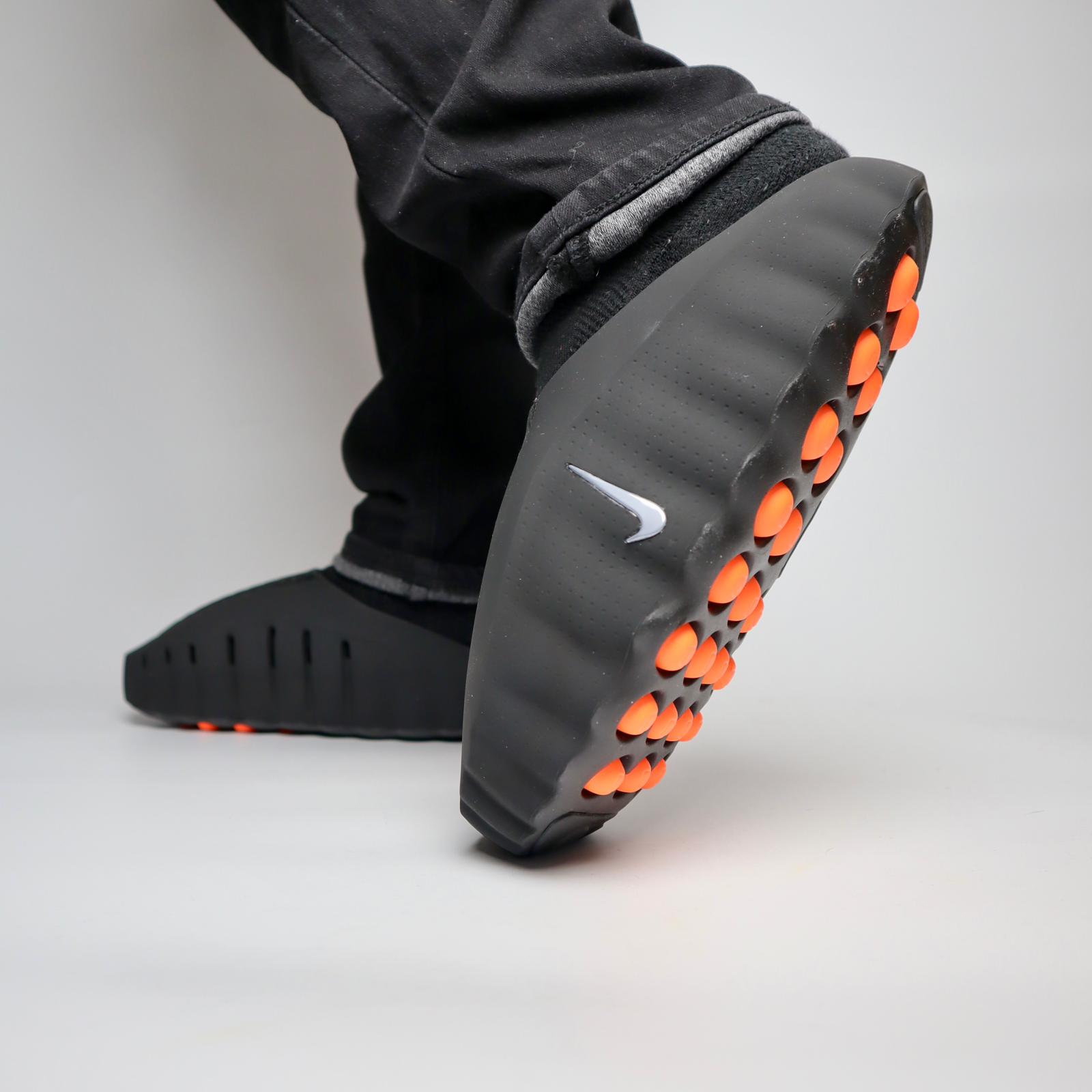
Comfort and Feel: Do You Really Walk on Clouds?
Let's address the central promise: does the Mind 001 actually deliver therapeutic-level comfort backed by neuroscience research, or is this wellness marketing wrapped around standard cushioning?
Initial Sensation:
Slipping into the Mind 001 feels distinctly different from traditional footwear. The 22 foam nodes create immediately noticeable texture variation underfoot—not uncomfortable, but present. You're aware of discrete contact points rather than uniform platform pressure.
This sensation is intentional. The nodes function as sensory activators, transmitting ground texture information that typically gets filtered by continuous cushioning. Your foot feels more connected to surfaces beneath without sacrificing comfort—a balance Nike's team spent years refining through extensive athlete testing.
Multiple reviewers describe the feeling as "walking on bubble wrap"—not the unstable, about-to-pop sensation of actual bubble wrap, but a soft, pressure-pointed experience where the nodes compress just enough and gently push into your foot in a comforting way.
The Piston and Gimbal Effect:
As you walk, the nodes compress and tilt independently. This creates subtle motion that heightens sensory feedback without instability. Nike describes them as "pistons and gimbals"—they move vertically under pressure and rotate slightly laterally as your foot naturally pronates during gait.
This mechanical complexity distinguishes the Mind 001 from traditional comfort footwear. Recovery slides offer uniform softness. The Mind 001 offers dynamic sensory engagement that keeps your nervous system actively processing foot position rather than numbing sensation entirely.
Walking Dynamics:
The Mind 001 doesn't optimize heel-to-toe transition like performance shoes. There's no rocker geometry pushing you forward, no responsive foam returning energy. The flat, uniform platform encourages natural, unhurried walking—you're not propelled; you're grounded.
This feels unusual initially if you're conditioned to responsive cushioning. Performance footwear trains you to expect push-back and forward momentum. The Mind 001 removes these cues, creating what Nike's research suggests is a more mindful walking experience that reduces cognitive load.
Interestingly, the nodes stop at the toe area on both the Mind 001 and Mind 002, with the undertoe feeling flat. This design choice focuses sensory activation on weight-bearing areas rather than creating stimulation across the entire footbed.
Sensory Clarity and Brain Activity:
Ground feel remains present despite cushioning. You'll sense major surface changes—concrete to grass, inclines, sidewalk irregularities—but without sharp feedback. The nodes filter impact while preserving enough sensation to maintain spatial awareness.
Nike's EEG research showed this balance activates brain regions associated with sensory processing and present-moment awareness while simultaneously increasing alpha wave activity—patterns linked to calm, focused mental states. You're more aware of your feet without that awareness becoming distracting.
"We've been able to show and prove that this design of footwear can influence how the mind functions," explains Dr. Nurse. Nike's mobile brain and body imaging lab allowed researchers to measure variations in brain activity in zones related to concentration and present-moment consciousness during testing.
Temperature and Weather:
The water-resistant upper material provides some protection, but the perforated zones prioritize breathability over weatherproofing. During summer testing, feet remained noticeably cooler than in standard sneakers. However, sustained rain penetrates relatively quickly, and cold weather requires thick socks that reduce the adaptive fit advantage.
Comparative Context:
Against Jordan 1: The Mind 001 eliminates the structured containment performance shoes provide. Where the Jordan creates constant foot awareness through support and restriction, the Mind 001 achieves awareness through sensory stimulation rather than containment.
Against Nike React models: React foam rebounds and energizes. Mind 001 foam absorbs and calms. If React accelerates your pace, the Mind 001 grounds your movement.
Against recovery slides: The Mind 001 offers comparable softness with significantly more coverage and social wearability. You gain mobility and acceptability without sacrificing the decompression effect.
Long-Duration Testing:
Wore these for a full day (concrete floors, minimal sitting). Expected fatigue never materialized. The consistent cushioning eliminated pressure point development that typically occurs during extended standing. However, the lack of arch support means these aren't orthopedic solutions—they're comfort delivery systems for healthy feet.
Some reviewers note the shoe feels "kind of stiff at first but loosens up a bit after walking in them for a while," though extended all-day wear may be fatiguing as the sensory stimulation is quite present throughout wear.
The Performance Limitation:
The Mind 001's therapeutic softness becomes a liability during dynamic movement. Lateral stability is minimal—these aren't appropriate for quick direction changes or athletic activity. The sensory platform that enhances recovery offers insufficient support for performance demands.
This isn't a design flaw; it's intentional specialization. The Mind 001 succeeds because it doesn't compromise recovery function for athletic versatility. Nike even markets these as "pregame mules" rather than all-day footwear, though this positioning seems contradictory to recovery purposes.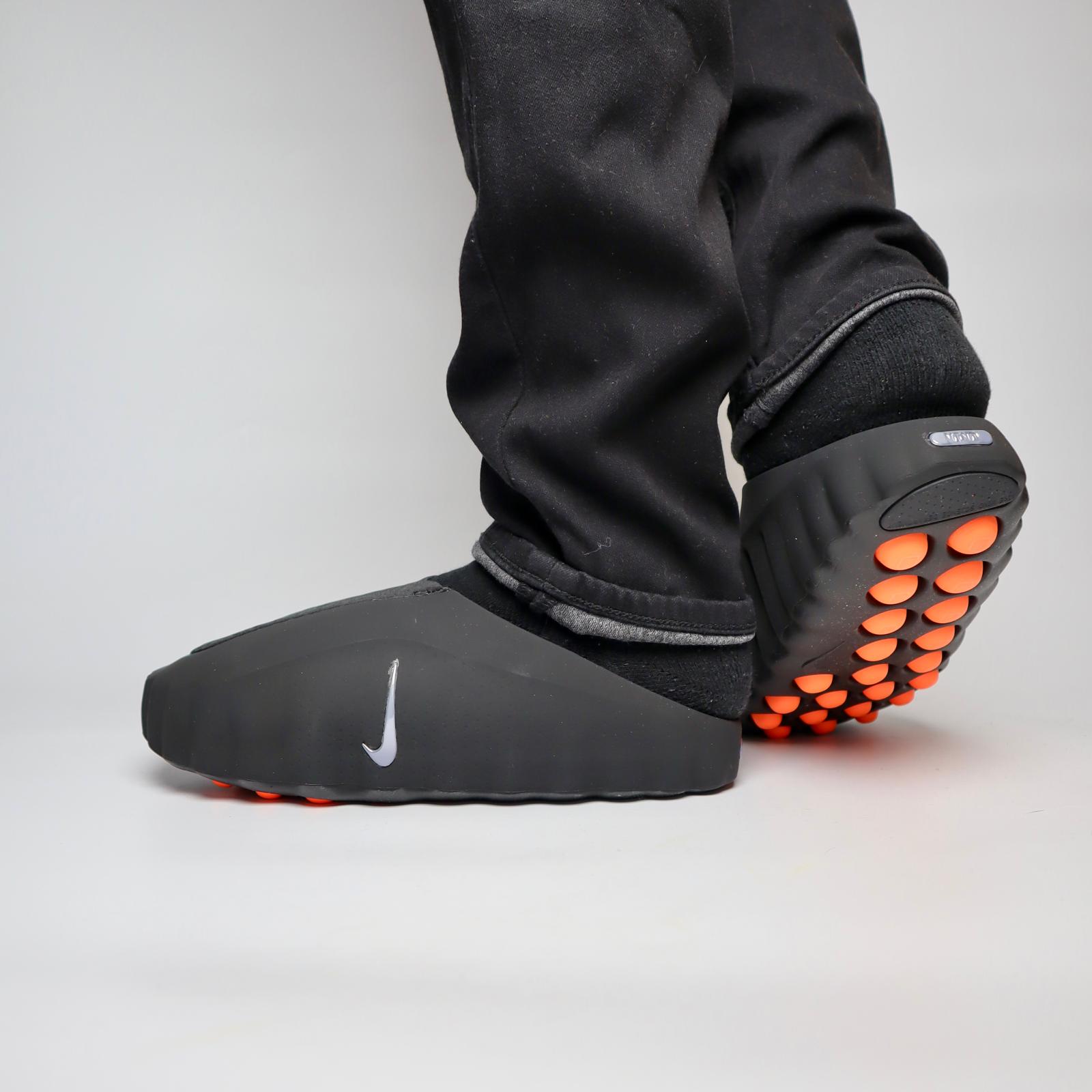
Sizing: What Size for Maximum Comfort ?
Direct Answer: Size up at least half a size. The Mind 001 runs significantly small, only comes in whole sizes, and requires aggressive upsizing to avoid heel overhang.
The Mind 001's sizing presents Nike's most problematic fit issue in recent memory. The combination of small-running dimensions, whole-sizes-only availability, and backless mule construction creates a sizing challenge that fundamentally affects whether the shoe functions as intended.
The Whole Sizes Only Problem:
Nike offers the Mind 001 exclusively in full US sizes—no half sizes available. This immediately creates issues for the roughly 50% of buyers who normally wear half sizes. You're forced to choose between going down (too small) or up (potentially too large), with no middle ground.
Nike's official sizing guidance states: "If you generally purchase a 1/2 size, we suggest sizing up for a comfortable fit." This significantly undersells the severity of the sizing issue based on real-world user feedback.
The Small-Running Reality:
At true to size, the vast majority of users experience heel overhang—your heel literally extends beyond the back edge of the mule. This isn't a minor fit preference; it's a structural problem that defeats the entire therapeutic purpose.
I experienced this personally at my normal Nike size (EU 42.5 / US 9). I ordered my standard size, and my heel either protruded slightly beyond the mule's edge or sat exactly at the boundary. Even if you try to push your foot forward to the front of the shoe : it creates a sensation that's uncomfortable and untenable in backless mules. You can see this heel positioning issue clearly in on-feet photos where the heel sits flush or extends past the mule's rear edge, creating instability and eliminating proper contact with the 22-node sensory platform.
Additionally, the flexible upper doesn't provide the lockdown that laced sneakers offer. If the footbed is too short, there's zero adjustment mechanism to compensate—your heel simply hangs off.
Minimum Sizing Recommendation: Half size up if you are a half-size wearers (e.g., if you wear US 9.5, order US 10), Full size up if you are a full size wearers (e.g., if you wear US 10, order US 11).
Based on extensive user feedback and personal testing, sizing up half a size or one full size resolves the heel overhang for most users:
- Proper heel containment within the mule structure
- Full contact with all 22 sensory nodes
- Stable platform positioning during walking
- Adequate toe room without excessive space
When to Size Up Even More:
Consider going up 1.5-2 full sizes if you:
- Have wider feet (the length sizing helps with width accommodation)
- Experience significant post-workout foot swelling
- Plan to wear thick recovery socks
- Prefer maximum room for foot relaxation
The EU 43 / US 9.5 Problem:
For those who wear EU 43 (US 9.5), you face an impossible choice since Nike doesn't produce this size. Your options are:
- US 9 (EU 42.5): Will likely be too small with heel overhang
- US 10 (EU 44): Your best bet—effectively a full size up
- US 11 (EU 45): Consider if you want maximum room or wear thick socks
This sizing gap affects a significant portion of potential buyers and represents a genuine accessibility issue.
Width Considerations:
The flexible upper provides decent width accommodation, but at true to size, wide-footed users find both length AND width restrictive. Sizing up one full size typically resolves both problems simultaneously.
Narrow-footed users still need to size up for length, though they may experience some lateral movement in larger sizes. The adaptive upper minimizes this, but it's worth noting.
Comparison to Other Nike Models:
- vs. Air Max models: If you wear US 9 in Air Max 90, order at least US 10 (possibly US 11) in Mind 001
- vs. React shoes: If you wear US 9 in React models, order at least US 10 in Mind 001
- vs. Jordan 1: If you wear US 9 in Jordan 1, order at least US 10 in Mind 001
- vs. Nike slides/mules: Mind 001 runs smaller than Calm slides and other Nike recovery footwear—size up more than you would for those
Zero Adjustment Capability:
The Mind 001 offers absolutely no fit customization. No laces, no straps, no Velcro, no BOA system. Your size choice is permanent and non-negotiable. This makes getting sizing right on first purchase critically important.
Break-In Reality:
The soft materials conform quickly, but they don't stretch to compensate for undersizing. If your heel overhangs at first wear, it will continue overhanging permanently. Don't expect the shoe to "break in" to accommodate incorrect sizing—the mule construction prevents this.
The Mind 001's recovery benefits completely disappear when your foot isn't properly positioned on the sensory platform. Heel overhang transforms therapeutic footwear into uncomfortable, unstable mules that fail at their core function.
The Harsh Reality:
Nike's combination of small sizing, whole-sizes-only availability, and mule construction without adjustment mechanisms makes the Mind 001 one of the most difficult Nike products to size correctly. The lack of half sizes particularly disadvantages half-size wearers who represent roughly half of all shoe buyers.
Given the $95 USD retail price and Nike's standard return policies, sizing up aggressively remains the safest approach. But be prepared for potential multiple orders to find your correct size—a frustrating process for a shoe marketed around effortless recovery.
Sizing Summary:
- Half-size wearers: at least +0.5 sizes up
- Whole-size wearers: +1.0 size up minimum
- Wide feet: +1.5 to 2 sizes up
- EU 43 / US 9.5 wearers: Order US 10 or 11
- True to size: Strongly not recommended—expect heel overhang and instability
The Mind 001's sizing issue is its most significant practical flaw and should heavily factor into purchase decisions.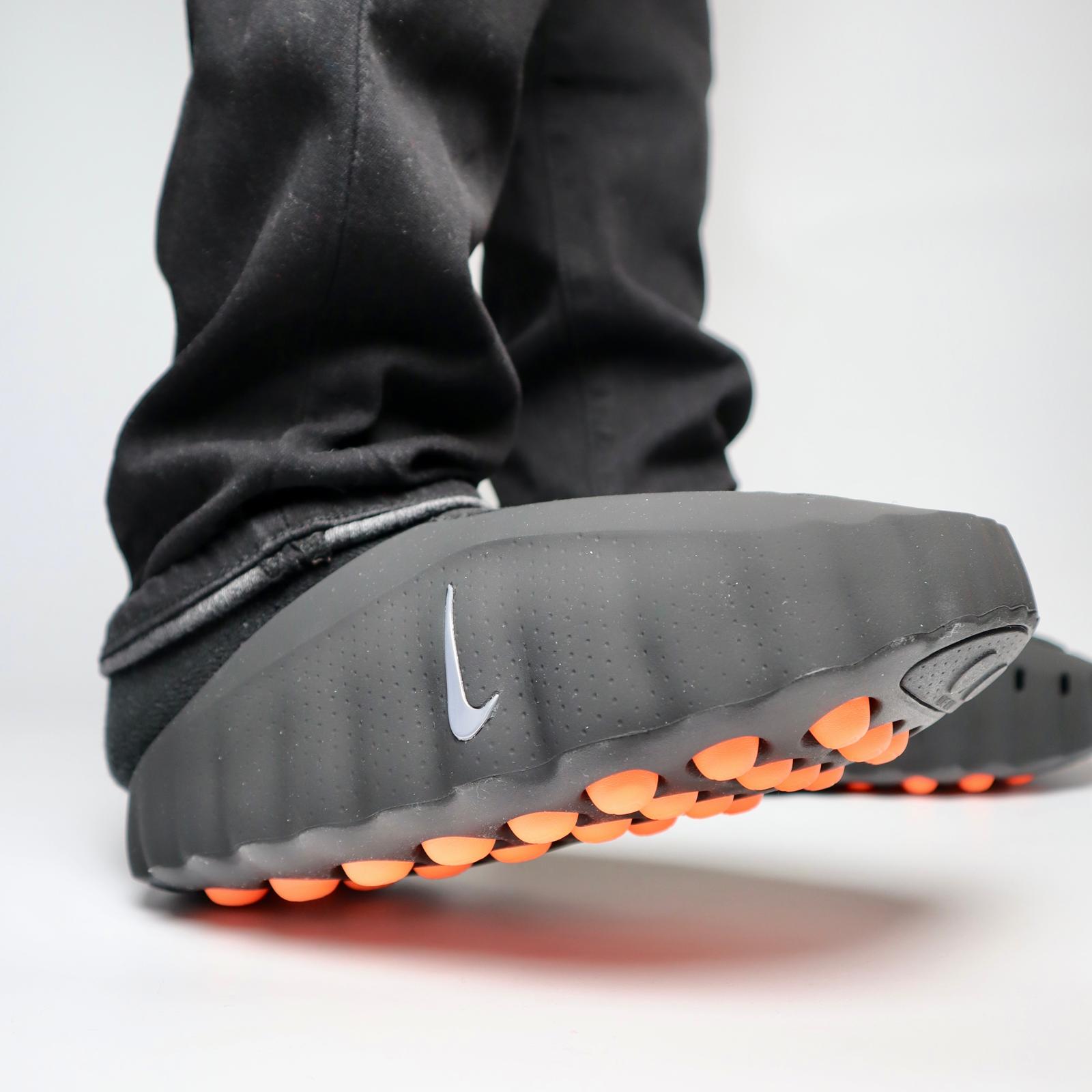
Final Verdict: Should You Buy It for Recovery?
After extensive testing across multiple recovery scenarios and analyzing widespread user feedback, the Nike Mind 001 'Black' succeeds as a specialized tool backed by legitimate neuroscience research, but remains a luxury rather than necessity for most athletes and active individuals. More critically, the sizing issues significantly complicate what should be a straightforward purchase.
The Compelling Positives:
Scientifically Validated Recovery Benefits:
The Mind 001 delivers measurable comfort improvement supported by EEG research showing altered brain activity patterns. The 22-node sensory platform reduces lower leg fatigue during standing recovery while the flexible upper eliminates foot constriction when inflammation increases blood flow. For athletes managing high training volumes—like Erling Haaland, A'ja Wilson, and Victor Wembanyama who tested prototypes over five years—this translates to tangible recovery enhancement.
Nike's decade of research through the Mind Science Department represents legitimate innovation rather than marketing hype. The American Podiatric Medical Association even awarded the Mind 001 its Seal of Acceptance, signaling the shoe helps promote good foot health.
Unique Sensory Experience:
The piston-and-gimbal node system creates a genuinely distinctive underfoot sensation. Whether you interpret this as therapeutic or simply interesting depends on personal preference, but it's undeniably different from any other footwear on the market. The "walking on bubble wrap" sensation provides constant sensory feedback that some users find grounding and focus-enhancing.
Social Acceptability:
Unlike traditional recovery footwear (slides, Crocs, medical shoes), the Mind 001 works in public contexts without signaling injury or sloppiness. The 'Black' colorway specifically integrates into casual wardrobes seamlessly, making it practical for gym-to-errands transitions without wardrobe changes.
Mule Convenience:
The backless construction offers genuine practical value during recovery periods when bending to tie laces creates unnecessary muscle engagement. The easy-on, easy-off design means you can transition from training to recovery mode without effort—a feature that seems minor until you're genuinely fatigued.
Premium Construction Quality:
Nike's build quality ensures the Mind 001 withstands regular use without premature deterioration. The water-resistant upper maintains integrity, the foam nodes retain compression characteristics, and the flexible base material allows continued independent node movement throughout the shoe's lifespan.
Cultural Phenomenon Status:
The Mind 001 sold out in under 5 minutes on launch day, creating genuine hype and scarcity. If you value having early access to innovative technology or culturally relevant footwear, the Mind 001 represents Nike's most talked-about wellness product in years.
The Honest Limitations:
Critical Sizing Issues (Major Problem):
The Mind 001 runs significantly small, only comes in whole US sizes (no half sizes), and requires most users to size up 1-1.5 full sizes to avoid heel overhang. This combination creates a frustrating purchase experience, particularly for half-size wearers and those in sizing gaps like EU 43. At $95, the risk of ordering wrong sizes and managing returns diminishes the "effortless recovery" positioning. This isn't a minor inconvenience—it's a fundamental design flaw that affects core functionality.
Accessibility and Availability:
The instant sell-out status means most interested buyers can't actually purchase the Mind 001 at retail pricing. Resale markets command premiums ($110-$150+ USD), and restock schedules remain unclear. Combined with sizing uncertainty, acquiring the correct size becomes genuinely challenging.
Reasonable But Not Budget Price:
At $95 USD, the Mind 001 sits in the mid-premium range—more expensive than basic slides ($30-50) but cheaper than high-end performance shoes ($180+). However, it occupies this price tier for footwear you explicitly can't use for athletic activity, making value assessment depend heavily on how seriously you approach recovery.
Weather Vulnerability:
The breathable, water-resistant upper handles light moisture but isn't weatherproof. Sustained rain penetrates relatively quickly, and cold weather requires thick socks that compromise the adaptive fit advantage. The Mind 001 is fundamentally three-season footwear in temperate climates.
Minimal Support Structure:
The therapeutic softness means limited arch support and lateral stability. Users with specific orthopedic needs (overpronation, plantar fasciitis, structural foot issues) won't find corrective support here. The Mind 001 optimizes for healthy feet seeking comfort, not compromised feet requiring correction.
Mule Limitations:
The backless construction restricts use cases. You can't run, navigate uneven terrain effectively, or wear them in situations requiring secure footwear. The mule design's convenience becomes a constraint outside its intended recovery context.
Subjective Sensory Experience:
The constant node stimulation proves divisive. Some users find it therapeutic and grounding. Others find it distracting or even uncomfortable during extended wear. One reviewer noted: "Without a doubt, you feel it. The issue is I'm not really 100% certain this is a good thing, at least not for me. Pretty much every step you take, you feel the nodes on the bottom of your feet."
The Mind 002 reportedly delivers even more intense sensory feedback, with one user noting: "I'd rate the feeling underfoot of the 001 at about 1 fifth the intensity of the 002. I can wear the 001 for an hour or more as they are really relaxed whereas with the 002 they are so intense I can only wear them for a few minutes at a time."
Niche Application:
For casual exercisers training 2-3 times weekly, recovery-specific footwear may be unnecessary. The Mind 001's benefits become most apparent during high-volume training phases or competitive seasons when recovery optimization meaningfully impacts performance.
The Verdict:
Buy if you:
- Train intensively (5+ sessions weekly) where recovery directly impacts performance
- Already invest in recovery tools (massage guns, compression boots, ice baths) and understand recovery's cumulative benefits
- Travel frequently and value foot comfort during long-duration flights
- Work in standing-intensive professions requiring daily foot relief
- Appreciate minimalist, wellness-focused design backed by legitimate research
- Can navigate the sizing challenges and potential multiple orders
- Value being part of Nike's neuroscience-based innovation story
Skip if you:
- Train casually without recovery demands justifying specialized footwear
- Have difficulty with online sizing (the whole-sizes-only and small fit create significant purchase friction)
- Live in wet/cold climates where weather limitations reduce wearability
- Require orthopedic support features for foot health conditions
- Prioritize versatile footwear serving multiple athletic and casual functions
- Find constant sensory stimulation potentially distracting rather than therapeutic
- Can't access retail pricing due to sell-out status and won't pay resale premiums
Final Assessment:
The Nike Mind 001 'Black' represents Nike's successful translation of neuroscience research into culturally acceptable footwear. The decade of development, EEG validation, and professional athlete testing demonstrate genuine innovation rather than marketing theater. It's more comfortable than standard sneakers during rest periods, and the design execution makes therapeutic footwear socially viable beyond home environments.
However, success as a research-backed recovery tool doesn't automatically justify purchase—especially given the significant sizing complications. For competitive athletes, serious training enthusiasts, and anyone treating recovery as systematically as training, the Mind 001 offers measurable value validated by years of testing with professionals like Haaland and Wilson.
For recreational exercisers, it's a luxury comfort item with frustrating accessibility rather than performance necessity. If you're already someone who foam rolls, uses percussion therapy, and prioritizes sleep optimization, the Mind 001 logically extends that recovery commitment—provided you can navigate the sizing challenges successfully.
If you're questioning whether recovery-specific footwear matters, you probably don't need it yet. And if you're a half-size wearer or fall into sizing gaps, the purchase friction may outweigh the therapeutic benefits.
The 'Black' colorway specifically makes this the most versatile Mind 001 option—if you're going to invest in recovery mules and can find your correct size, this is the execution that maximizes wearability beyond pure athletic contexts.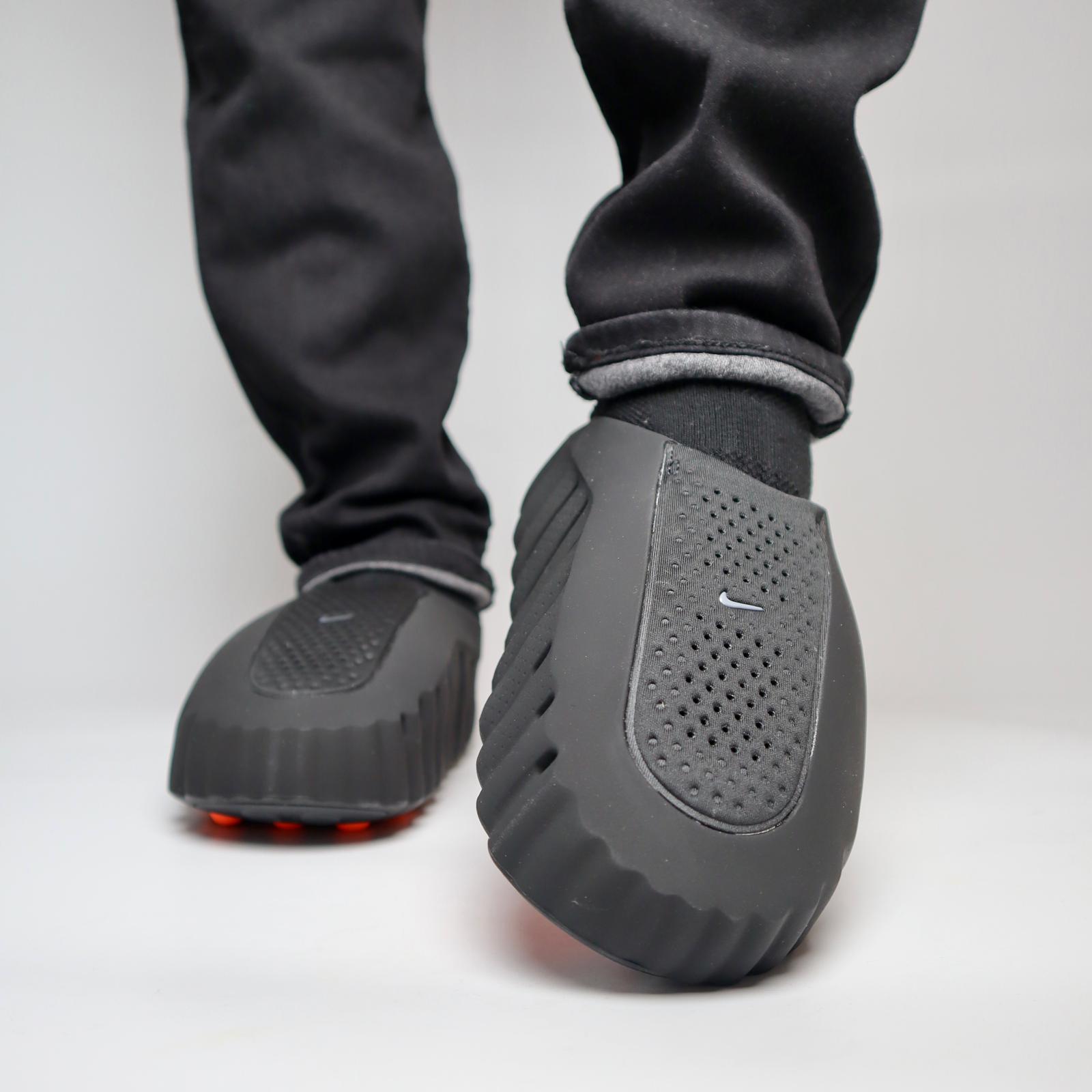
Where to Buy Nike Mind 001 at the Best Price
The Nike Mind 001 'Black' launched on January 8, 2026 with an official retail price of $95 USD / €95 EUR / £85 GBP. This pricing positions it competitively against other premium slides and recovery footwear—the Nike ReactX Rejuven8 retails at $75, Nike ACG Rufus at $115, and Nike Calm at $65.
Official Retailers:
- Nike Store - Sold out rapidly (under 5 minutes on launch day)
- Foot Locker US - Available in-store and online with rewards program benefits
- Dick's Sporting Goods - US retail availability
- Scheels - US retail availability
Current Availability Status:
The Mind 001 sold out completely within 5 minutes of its January 8, 2026 launch across most retailers. Clearly people want this neuroscience-based Nike mule—the viral marketing campaign and innovative technology created unprecedented demand.
Nike has announced plans for multiple restocks and additional colorways throughout 2026. Initial colorways included 'Light Smoke Grey' and 'Solar Red' alongside the 'Black Chrome' version, with more color options planned.
Resale Market:
Due to instant sell-out status, resale prices on StockX and similar platforms currently range from $110-$150+ USD depending on size and colorway:
- Women's Black Chrome: $95-$99
- Men's Black Chrome: $125-$151
- Light Smoke Grey: $95-$110
- Solar Red: $99-$125
- Light Bone: $149+
The 'Black Chrome' colorway in men's sizing commands the highest resale premiums due to its versatile aesthetic.
Restock Strategy:
Sign up for Nike Member notifications to receive restock alerts and early access to future releases. The Mind platform represents a new ongoing product line for Nike rather than a limited release, suggesting more consistent availability compared to hyped sneaker drops once production scales up.
Given the whole-sizes-only availability and small fit, monitor multiple sizes during restocks to ensure you can secure your correct size (remember: size up 1-1.5 full sizes from your normal Nike size).
Check current availability and restocks
FAQ: Nike Mind 001 'Black'
Does the Nike Mind 001 run true to size?
No, the Mind 001 runs significantly small. You should size up at least one full size from your normal Nike size. The mule only comes in whole US sizes (no half sizes), so half-size wearers need to size up at least half a size or 1.5 size for wide feet. At true to size, most users experience heel overhang where your heel extends beyond the back of the mule, eliminating proper contact with the 22-node sensory platform.
Can you run in Nike Mind 001?
No, the Mind 001 is not designed for running or athletic performance. The soft cushioning, minimal lateral stability, and backless mule construction optimize for recovery and rest rather than dynamic movement. Nike markets these as "pregame mules" but they're best suited for post-workout recovery, rest days, and comfort situations. Use performance-specific running shoes for training.
How does Nike Mind 001 sizing compare to Air Max?
The Mind 001 runs 1-1.5 sizes smaller than most Air Max models. If you wear a size 10 in Air Max 90, you should order at least US 11 (possibly US 12) in the Mind 001. The combination of small dimensions and mule construction without heel counter creates significantly different fit dynamics than structured Air Max sneakers.
Is Nike Mind 001 good for standing all day?
The Mind 001's 22 independent foam nodes and breathable upper make it effective for extended standing periods, with users reporting reduced fatigue during 8-hour days on concrete floors. However, the constant sensory stimulation may be fatiguing for some users. The lack of arch support means it works best for users with healthy feet rather than those requiring orthopedic correction. It's not necessarily designed for full all-day wear despite its comfort.
What is Nike Mind 001 used for?
The Mind 001 serves as neuroscience-based recovery footwear designed for post-workout cooldowns, rest days, travel, pregame mental preparation, and daily comfort situations where sensory foot stimulation enhances mental clarity and physical recovery. It's part of Nike's Mind/Body initiative from the Mind Science Department, focusing on brain-body connection optimization through 22 sensory nodes that activate key areas of the brain.
Is Nike Mind 001 waterproof?
No, the Mind 001 features a water-resistant upper that handles light moisture and splashes but isn't fully waterproof. The material provides protection against brief exposure, but sustained rain will penetrate. The breathable construction with perforations prioritizes temperature regulation over complete weather protection, making it best suited for dry conditions.
Who tested Nike Mind before release?
Nike conducted five years of testing with hundreds of athletes including Erling Haaland (Manchester City football), A'ja Wilson (Las Vegas Aces basketball), and Victor Wembanyama (San Antonio Spurs basketball). The extended testing period allowed Nike's Mind Science Department to refine the 22-node configuration and sensory platform based on professional athlete feedback and EEG brain activity measurements.
Why doesn't Nike Mind 001 come in half sizes?
Nike only offers the Mind 001 in whole US sizes, forcing half-size wearers to choose between full sizes. Nike's official guidance suggests sizing up if you normally wear half sizes, though this undersells the severity—most users need to size up if they're half-size wearers. This limitation creates accessibility issues for roughly half of potential buyers.
What does the Nike Mind 001 feel like?
The sensation is often described as "walking on bubble wrap"—a soft, pressure-pointed experience where 22 independent foam nodes compress and provide constant sensory feedback. The nodes act as pistons and gimbals, moving vertically and tilting laterally as you walk. This creates heightened ground feel without sharp impact. The experience is distinctive and divisive—some find it therapeutic and grounding, others find it distracting during extended wear.
How much does Nike Mind 001 cost?
The Nike Mind 001 retails at $95 USD / €90 EUR / £80 GBP through official Nike channels. Due to sell-out status, resale prices range from $110-$150+ depending on size and colorway. This positions it in the mid-premium range for recovery footwear—more expensive than basic slides but less than high-end performance shoes.