Cookie Consent by Free Privacy Policy Generator website

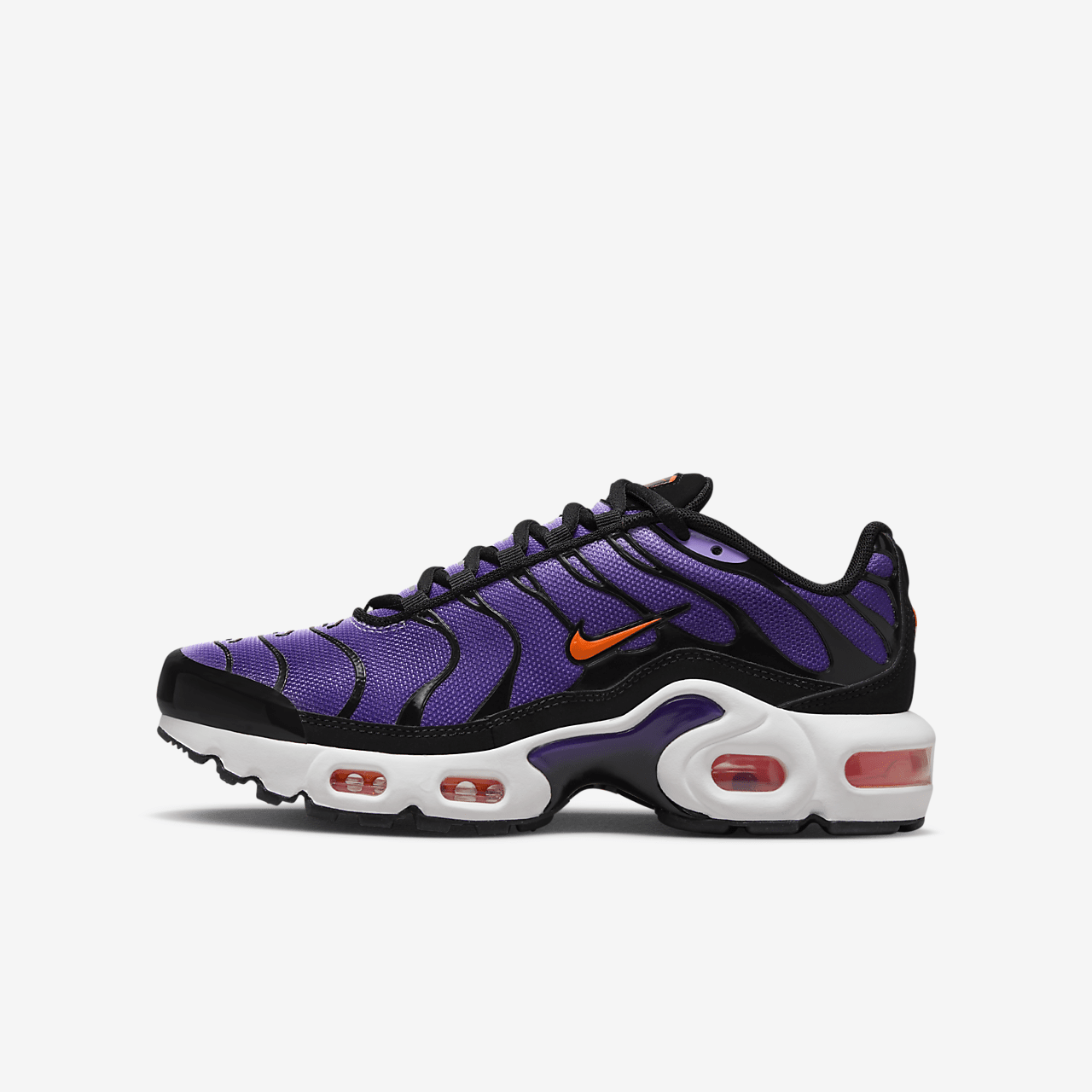
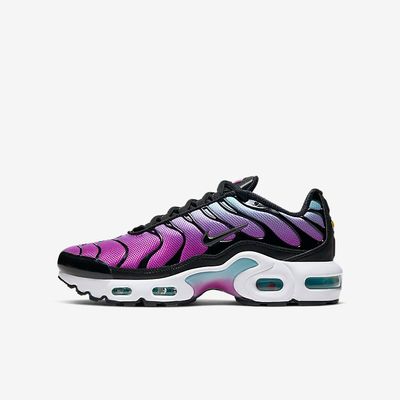
Big-kids Purple Lifestyle Nike Air Max Plus Sneakers Releases

Nike Air Max Plus (TN): The Complete Guide to the Rebellious Icon

Released in 1998 from the "Sky Air" project – a crucial collaboration between Nike and Foot Locker – the Air Max Plus represents both technological revolution and aesthetic defiance.
Designed by rookie Sean McDowell after 15+ proposals were rejected, the streets immediately adopted this design, nicknamed "Requin" in France, transforming it into a symbol of originality and cultural resistance.

Showing Products 1-2 of 2 Results

1998: The Sky Air Project That Changed Everything

The Air Max Plus emerged from a crucial 1997 collaboration between Nike and their most important retail partner, Foot Locker. The project, internally coded "Sky Air," tasked Nike with creating an exclusive running shoe featuring the brand's breakthrough Tuned Air technology. After Foot Locker rejected over 15 design proposals from established Nike designers, the project landed on Sean McDowell's desk – a rookie designer who had literally just joined Nike in 1997.

What McDowell possessed that previous designers didn't was a sketchbook filled with Florida sunset observations from a recent vacation. During evenings on the beach between jobs, he'd sketched palm trees swaying in coastal winds and the sky transitioning from blue to dark navy at dusk. When he heard the "Sky Air" project name, these beachside sketches immediately came to mind. The distinctive TPU wave overlays wrapping across the upper directly translated those wind-bent palm trees into functional support structures.

The iconic gradient colorways – particularly the legendary "Sunset" – emerged from those same Florida sunset observations where orange, red, and purple hues blend seamlessly. Creating smooth, multi-color gradients on textile required Nike to develop entirely new sublimation processes specifically for this project. McDowell confidently told skeptical colleagues "We'll just sublimate it" when told it couldn't be done.

The Foot Locker presentation proved equally unconventional. After McDowell attended meetings alongside future Nike president Mark Parker, a Foot Locker executive suggested an unprecedented market research experiment: place the shoe on a store shelf at school dismissal time and observe what happens. Within five to ten minutes, approximately ten kids swarmed the display, frantically asking store associates "What is this? How do I get it?" The associates themselves had never seen the shoe and couldn't answer basic questions about pricing or availability. Foot Locker executives witnessed everything they needed – they immediately cancelled planned focus groups and approved production. This organic youth response validated McDowell's aggressive design that stood in opposition to late-90s minimalism, creating footwear that demanded attention and divided opinions from day one.

Anatomy of a "Requin": Beyond the Air Bubble

The Air Max Plus's complexity extends far beyond its striking appearance, incorporating multiple innovative technologies that justified its premium positioning.

Tuned Air Technology: The defining innovation that gives the shoe its "TN" designation. Unlike standard Air Max cushioning that uses uniform air pressure throughout the unit, Tuned Air employs strategically placed Pebax hemispheres within the air chambers. These semi-rigid pods provide targeted support and dynamic stability exactly where the foot needs it during running stride – firmer support in high-stress areas, more cushioning where impact absorption matters most. This "tuned" approach delivered performance advantages that generic air cushioning couldn't match.

TPU Exoskeleton: The famous flowing "waves" or "veins" that define the shoe's aggressive profile serve structural purposes beyond aesthetics. These thermoplastic polyurethane overlays create an external support cage that locks down the midfoot and heel, preventing unwanted movement during lateral cuts and aggressive directional changes. The palm tree-inspired design distributes support forces across broader areas, creating stability without the stiff, restrictive feel of traditional support systems.

Whale Tail Midfoot Shank: The distinctive TPU piece wrapping around the midfoot area takes design cues from a whale's tail diving beneath ocean waves – another of McDowell's beach-inspired elements. This rigid component prevents excessive torsional twisting, maintaining structural integrity during the foot's natural pronation cycle. The engineering here transformed flexibility into controlled stability.

"TN Air" Badge: The hexagonal yellow badge displaying "TN Air" technology became an instant status symbol transcending its informational purpose. In certain cultural contexts, particularly French urban communities, this small detail evolved into a recognition marker – those who knew, knew. The badge's prominence on the tongue ensures visibility, making the technology declaration impossible to miss.

The Complete Guide to Nike Air Max Plus

How does the Nike Air Max Plus (TN) fit?

The TN runs true to size for most wearers. However, the TPU support cage can create a snug feel around the midfoot and sides. Those between sizes or with wider feet should consider going up half a size for improved comfort, as the structural overlays don't stretch like fabric materials.

What's the difference between "Air Max Plus" and "Air Max TN"? Are they the same shoe?

Yes, they're the same shoe with different names. The official Nike name is "Air Max Plus," but it's widely known as "TN" (short for "Tuned") or "Air Max TN" because of its revolutionary Tuned Air technology. Nike uses both names interchangeably in marketing and product descriptions. In some regions like Australia and the UK, "TN" became the dominant term, while other markets use "Air Max Plus" more frequently. You'll also see it called "Tuned 1" or "TN1" to distinguish it from later models (TN2, TN3).

Why is it called "Requin" (Shark) in France?

The "Requin" nickname is uniquely French, emerging from the shoe's aggressive design language. The flowing TPU lines resemble shark gills, certain iridescent colorways evoke shark skin's shimmering quality, and marine-inspired original colorways reinforced oceanic associations. The name stuck and became so embedded in French street culture that many French speakers primarily know this shoe as "Requin" rather than "Air Max Plus."

Is the TN comfortable?

Yes, though the comfort differs from softer Air Max models. Tuned Air delivers firmer, more responsive cushioning compared to the plush feel of Air Max 90 or 95. This creates excellent support and stability that many find ideal for all-day wear, though those preferring cloud-like softness might need adjustment period. The firmness prevents bottoming out during extended wear.

What's the difference between TN 1, TN 2 and TN 3?

The TN 1 is the 1998 original and most iconic version – this is the shoe everyone pictures when you say "TN." The TN 2 (released 2000) and TN 3 (2001, re-released 2019) are design evolutions featuring even more aggressive, angular TPU cages and silhouettes that pushed the aesthetic further into early-2000s maximalism. TN 1 remains the cultural favorite and most frequently retro'd version.

Can you still run in Air Max Plus?

No – while revolutionary for running in 1998, it's now purely a lifestyle sneaker. Running shoe technology has advanced dramatically over 25+ years. Modern Nike running models offer lighter weights, more advanced foam compounds, and geometry specifically engineered for contemporary training demands. Preserve your TNs for their intended modern purpose: looking incredible.

Why is the TN so popular in France and Australia?

Cultural adoption patterns created regional strongholds. In France, the TN became embedded in banlieue (suburb) youth culture during the early 2000s, adopted as unofficial uniform by diverse urban communities and eventually permeating broader French streetwear. In Australia, similar adoption occurred within working-class suburbs and later the rave/Gabber scene. UK Grime culture also embraced it heavily. These organic adoptions created self-reinforcing cultural associations that persist today.

More Than a Sneaker, A Cultural Uniform

Few shoes can claim to have defined an entire generation's style vocabulary. The Nike Air Max Plus stands among that elite few. A symbol of character, independence, and refusal to conform, it continues fascinating new audiences while maintaining devoted following among those who've worn it for decades. Explore our selection above and find the TN that will assert your distinctive style.