Cookie Consent by Free Privacy Policy Generator website

Lifestyle Vans Knu Skool Sneakers Releases

The Vans Knu Skool has exploded across TikTok and Instagram as the defining skate shoe for a generation that never experienced the original 1998 release. A bold reinterpretation of classic Vans DNA, the Knu Skool takes everything familiar about the Old Skool and amplifies it—puffy padded tongues, exaggerated 3D side stripes, chunky proportions, and distinctive wide laces that have become a styling signature. What started as a deep-cut archive model has become the go-to sneaker for baggy jeans, Y2K aesthetics, and anyone who believes that if the classic Old Skool is a whisper, the Knu Skool is a shout. This is Vans for the chunky sneaker era, proving that sometimes bigger really is better.

How Does the Vans Knu Skool Fit ?

The Knu Skool's dramatically padded appearance causes sizing anxiety for many first-time buyers—the chunky silhouette, thick collar, and substantial tongue make it look like it would fit completely differently from standard Vans. The reality is reassuring: despite the exaggerated external proportions, the Knu Skool fits true to size (TTS).

Standard Sizing Recommendation: Order your regular Vans size, or if you don't own Vans, your standard sneaker size. The internal footbed dimensions are consistent with other Vans models—the Old Skool, Authentic, and Era all share similar internal fit, and the Knu Skool follows this standard despite looking much larger externally. A US 9 in Old Skool will be a US 9 in Knu Skool; the chunky padding and puffy construction don't actually reduce internal space.

Understanding the Padding: The Knu Skool's substantial collar padding and thick tongue create a "hugged" sensation around your ankle and top of foot. This isn't tightness from incorrect sizing—it's the shoe's defining comfort feature. The padding compresses slightly with wear, conforming to your specific foot and ankle shape over the first week. What feels snug initially becomes perfectly molded after several wears, creating a custom-fit sensation that many wearers describe as "slipper-like."

For Wide Feet: Resist the temptation to size up. The Knu Skool's canvas and suede upper has natural give, and the substantial padding actually accommodates wider feet better than slimmer Vans models. Sizing up will create excessive length while not providing meaningful width benefits, leading to heel slip—a common complaint from those who sized up unnecessarily. The padding compresses where your foot applies pressure, effectively creating width accommodation without requiring a larger size.

Break-In Consideration: The first 2-3 wears might feel snug around the collar and tongue, particularly if you're accustomed to low-profile sneakers. This is normal and temporary. The padding settles and softens rapidly with use. Don't make sizing decisions based on the very first wear; give the shoe a few sessions to break in before concluding the fit is wrong.

Comparison to Old Skool: If you own Old Skools, order the same size in Knu Skool. While the Knu Skool looks dramatically larger and bulkier, the actual foot cavity is nearly identical. The difference is entirely in external padding and construction, not internal dimensions. Longtime Vans wearers often describe the Knu Skool as "Old Skool in a winter coat"—same core, more insulation.

Height and Ankle Support: The Knu Skool's higher collar extends further up the ankle than the Old Skool, providing more coverage and support. For those with higher-volume ankles or who find standard Old Skool collars dig into their ankle bones, the Knu Skool's padded collar is actually more comfortable despite appearing bulkier. The padding distributes pressure rather than creating a single contact point.

Vans Knu Skool vs. Old Skool: Understanding the Differences

The Knu Skool and Old Skool share obvious DNA—the iconic side stripe, skate heritage, Vans waffle outsole—but they serve distinctly different aesthetic purposes and appeal to different style sensibilities.

Visual Profile: The Old Skool is sleek, streamlined, and sits close to the foot. Its proportions are balanced and restrained, with minimal padding and a slim tongue that stays flat against your foot. The side stripe is a flat embroidered detail. The overall silhouette is refined and versatile, working equally well with slim jeans or relaxed fits.

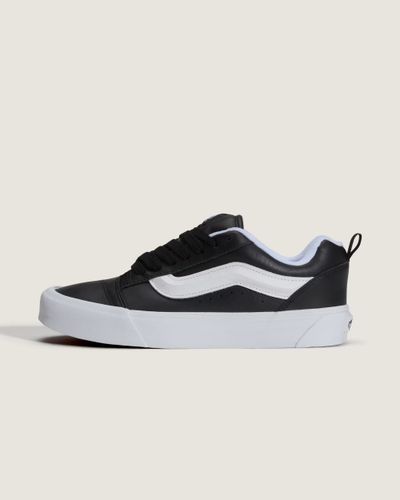
The Knu Skool is chunky, substantial, and deliberately oversized in appearance. The tongue is massively padded and protrudes forward noticeably. The collar is thick with visible padding even when laced. Most distinctively, the side stripe is a raised, three-dimensional appliqué that adds actual depth to the shoe's profile rather than just visual detail. The overall silhouette is bold and statement-making, demanding attention rather than blending in.

Lacing System: Old Skool uses standard flat laces threaded through metal eyelets—straightforward, functional, clean. The laces can be any width and style; many people replace them with colored or patterned options without affecting the shoe's character.

Knu Skool features thick, puffy round laces (sometimes called "fat laces") that are integral to its identity. These laces are substantially thicker than standard laces, creating visual impact and a distinctly '90s skate aesthetic. The lacing technique also differs—Knu Skool wearers typically lace loosely rather than tight, allowing the puffy tongue to maintain its forward position and the laces to drape rather than pull taut.

Material and Construction: Old Skool typically features canvas or suede in relatively thin, pliable constructions. It's lightweight and flexible from the first wear. The minimal padding keeps weight down and creates a broken-in feel quickly.

Knu Skool uses thicker suede more consistently, with substantial padding throughout the collar, tongue, and even within the upper panels. It's noticeably heavier and more structured. The first wears feel stiffer because there's more material to break in, but the end result is more cushioned comfort and better impact protection—particularly valuable for actual skateboarding.

Style Context: Old Skool is the versatile classic that works with virtually any casual outfit—skinny jeans, straight-leg denim, chinos, shorts. It's understated enough to disappear into an outfit or stand out based on colorway choice. It communicates skate heritage without demanding that you dress specifically around it.

Knu Skool demands intentional styling. The chunky proportions require baggy or wide-leg pants to create balanced proportions—pairing Knu Skools with skinny jeans creates an unflattering "clown feet" effect. It's a statement piece that anchors Y2K-inspired outfits, oversized streetwear, and deliberately nostalgic looks. It works brilliantly in its specific aesthetic lane but is less versatile across different styles.

Cultural Positioning: Old Skool is timeless—it's been continuously cool since 1977 across multiple generations and subcultures. It's the safe choice that will never feel wrong.

Knu Skool is trendy—it's having a specific cultural moment driven by Y2K nostalgia and TikTok aesthetics. It may become a lasting classic, but currently it reads as deliberately fashion-forward rather than timelessly neutral. Choosing Knu Skool signals awareness of and participation in current trends.

The Decision: If you want maximum versatility, understated style, and a proven classic, choose Old Skool. If you want to participate in current trends, prefer chunky sneaker aesthetics, and plan to wear baggy pants, choose Knu Skool. If you primarily care about skateboarding function, the Knu Skool's extra padding provides better protection, but both are legitimate skate shoes. There's no wrong choice—just different priorities.

The Critical Point: How to Lace Vans Knu Skool

The Knu Skool's distinctive puffy laces are inseparable from its identity—they're not just functional elements but style signatures that define the shoe's aesthetic. Understanding how to lace them properly is essential for achieving the intended look.

The Loose Lacing Philosophy: The cardinal rule of Knu Skool lacing is this: don't lace tight. The puffy tongue and chunky proportions are designed to be displayed, not compressed. Threading the laces through all eyelets but keeping them loose allows the tongue to maintain its forward protrusion and the collar to stay puffy and voluminous. This creates the "sloppy" aesthetic that's actually the intended, styled look.

When you pull laces tight on a Knu Skool, you flatten the tongue, compress the collar padding, and eliminate the very features that distinguish it from an Old Skool. The shoe loses its character and looks awkward—like a chunky sneaker trying to be sleek. Resist the instinct to cinch everything down.

Lace Length Management: The puffy laces are deliberately short relative to the number of eyelets—this prevents excessive lace dangling when tied loosely. After threading through all eyelets with loose tension, you have two main options for finishing:

Option 1: Tie a small bow and tuck it behind the tongue or to the side. The bow won't be prominent because the short lace length prevents large loops. This is the most common approach and keeps everything contained.

Option 2: Leave them untied and tuck the lace ends into the sides of the shoe, between the tongue and the upper. This creates an even more casual, effortless appearance but requires ensuring the laces are secure enough not to fall out during wear. This works best with slightly longer aftermarket laces.

The Pull Tab Advantage: The Knu Skool features pull tabs (loops) at the heel, which serve a crucial function for loose lacing: they allow you to pull the shoe on without needing to loosen laces first. With laces kept consistently loose, you can slip the Knu Skool on and off using the heel tabs without ever adjusting the lacing. This convenience is intentional design that accommodates the loose lacing style.

When to Lace Tighter: If you're actually skateboarding rather than wearing the Knu Skool casually, slightly tighter lacing provides better foot lockdown during tricks and high-impact movements. But even for skating, don't lace so tight that you compress all the padding—the cushioning is part of the shoe's protective function. Find a middle ground between style-focused loose lacing and performance-focused security.

Lace Replacement: The original puffy laces are specific to the Knu Skool and finding exact replacements can be challenging. If you want to customize with different colors, search for "puffy laces," "fat laces," or "wide oval laces" in 120-130cm length. Standard round or flat laces won't achieve the same aesthetic—the thickness is essential to the Knu Skool's identity.

Comfort and Durability: The Practical Assessment

Beyond the Knu Skool's trendy aesthetics, the shoe delivers genuine functional benefits that justify its position in Vans' lineup and make it more than just a fashion piece.

Superior Comfort: The Knu Skool is noticeably more comfortable than the standard Old Skool, primarily due to the extensive padding throughout the construction. The thick collar cushions your ankle, preventing the pressure points and rubbing that can occur with slimmer skate shoes. The puffy tongue adds comfort across the top of your foot, distributing lacing pressure rather than creating a single pressure line. The overall effect is slipper-like—the Knu Skool hugs your foot in a cushioned embrace rather than simply containing it.

This enhanced comfort makes the Knu Skool particularly suitable for all-day wear. While the Old Skool can feel harsh during extended periods on your feet (due to minimal padding and firm construction), the Knu Skool maintains comfort through long days. Many wearers report that despite being heavier, the Knu Skool actually feels better during extended walking than lighter but less padded alternatives.

Suede Durability: Most Knu Skool colorways feature suede as the primary upper material rather than canvas. Suede is inherently more durable and abrasion-resistant than canvas, particularly important for skateboarding where the shoe's toe and side panels take repeated impacts from grip tape. A canvas Old Skool might develop holes within months of regular skating; a suede Knu Skool typically lasts significantly longer under the same conditions.

For non-skating wear, the suede's durability means the shoe maintains its appearance better over time. Canvas shows wear quickly through fading, fraying, and general deterioration; suede ages more gracefully, developing character rather than looking destroyed. This longevity is particularly important for parents purchasing shoes for teenagers—the Knu Skool's construction withstands the abuse of daily school wear better than cheaper canvas alternatives, making it a better long-term investment despite higher upfront cost.

Weather Resistance Caveat: Suede's durability comes with a significant limitation: it's vulnerable to water damage. Rain, puddles, and wet conditions can stain suede permanently, creating dark spots and altering texture. Unlike canvas (which dries and returns to normal) or leather (which can be conditioned), suede requires careful maintenance and should ideally be treated with water-repellent spray before first wear.

For regions with frequent rain or wet winters, the suede Knu Skool requires consideration. Either commit to protective treatments and careful wear, or select canvas colorways when available. Don't let the Knu Skool become your rainy-day shoe unless you're prepared for accelerated deterioration and permanent staining.

Skateboarding Protection: The Knu Skool's padding isn't just comfort—it's legitimate protection during skateboarding. The thick collar protects ankles from board impacts (when the deck swings around and hits your ankle, a common and painful occurrence). The padded tongue shields the top of your foot from lace bite and board contact. For skaters, particularly beginners who haven't developed board control, this protection meaningfully reduces bruising and discomfort.

The suede upper also provides better board feel than heavily synthetic skate shoes while maintaining durability. You can sense the board position through the suede during tricks, which helps with precision and control. Combined with Vans' proven waffle outsole (which provides excellent grip on grip tape), the Knu Skool is a legitimate performance skate shoe, not just a lifestyle interpretation of skate aesthetics.

Essential Colorways: From Classic to Statement

The Knu Skool's colorway selection ranges from safe versatility to bold statements, with certain releases becoming particularly popular:

Black/White: The ultimate versatile Knu Skool and the best choice for first-time buyers. Black suede upper with white side stripe and white midsole/foxing creates maximum contrast while remaining neutral enough to work with virtually any outfit. This colorway showcases the shoe's chunky silhouette clearly while being understated enough for daily wear. It's also the most popular for school shoes—formal enough to satisfy dress codes while remaining stylish.

True White: All-white construction creates a clean, minimal aesthetic that's surprisingly popular despite suede's vulnerability to staining. The monochromatic approach emphasizes the shoe's sculptural qualities—the puffy padding and 3D side stripe become more apparent without color contrast. Requires committed maintenance but delivers strong visual impact.

Navy/White: Evokes classic American college aesthetics with dark navy suede and white accents. This colorway feels slightly more mature and refined than black, working particularly well in preppy or east coast-inspired outfits. Less stark than black/white but equally versatile.

Mega Check: A bold reinterpretation of Vans' iconic checkerboard pattern, enlarged to exaggerated proportions that match the Knu Skool's maximalist aesthetic. The oversized checks transform a classic Vans detail into a statement pattern. This colorway divides opinion—fans love its audacity, skeptics find it excessive. It's decidedly not versatile but perfect for those who want their footwear to be conversation starters.

Availability and stock vary by region and season, but core colorways (particularly Black/White) maintain consistent availability through Vans.com and major retailers. Limited editions and collaborative releases command premium prices and sell out quickly—approach these as collectible items rather than practical daily wear options.

The Complete Vans Knu Skool Guide (FAQ)

Does the Vans Knu Skool make your feet look huge?

Yes, and this is entirely intentional—the "chunky" or "big feet" effect is the core aesthetic appeal, not an unfortunate side effect. The Knu Skool's exaggerated proportions, thick padding, and substantial sole create a deliberately oversized silhouette that makes feet appear larger than in slim-profile sneakers. This is the point.

However, whether this looks good or awkward depends entirely on what you're wearing with them. Paired with skinny jeans, slim-fit pants, or any bottom that hugs your legs, the contrast between narrow legs and chunky shoes creates an unbalanced, clown-like proportion. This is unflattering and exactly what you want to avoid.

The Knu Skool is designed for baggy pants, wide-leg jeans, cargo pants, or parachute pants—bottoms with substantial volume that balance the shoe's chunky proportions. When your pants have width and drape over the shoes partially, the overall silhouette becomes cohesive and intentional. The "big feet" effect is neutralized by appropriate pant proportions.

If you primarily wear slim or fitted pants and aren't willing to adjust your style, the Knu Skool will look wrong. Choose the Old Skool instead—it works with all pant fits. But if you embrace current Y2K-inspired proportions with baggy bottoms, the Knu Skool's chunky aesthetic becomes a strength rather than a problem.

What's the correct lace length for Knu Skool?

The original Vans Knu Skool puffy laces measure approximately 120-130cm in length, depending on the specific release and region. More importantly than exact length, the laces are distinctively thick—they're oval or flat-oval profile laces that are substantially wider than standard round laces, creating the "puffy" appearance that defines the shoe.

If you're replacing laces due to wear or wanting different colors, search for "puffy laces," "fat laces," "oval laces," or "wide laces" in the 120-130cm range. Regular round laces in standard thickness (even at correct length) won't achieve the Knu Skool aesthetic—they'll look too thin and out of character with the shoe's chunky proportions.

Many sneaker accessory brands make Knu Skool-compatible puffy laces in various colors, allowing customization while maintaining the shoe's intended look. When selecting aftermarket laces, prioritize width/thickness over exact length—slightly longer laces can be trimmed or tucked, but thin laces can't be made thicker.

Some wearers prefer slightly longer laces (140-150cm) to create more drape or allow different lacing styles. This is personal preference territory—experiment to find what works for your aesthetic goals.

Can you actually skate in Vans Knu Skool?

Absolutely—the Knu Skool is a legitimate skateboarding shoe, not just a lifestyle product borrowing skate aesthetics. Vans designed it with actual skating in mind, and it performs well for the purpose despite its current popularity among non-skaters.

The suede upper provides excellent durability against grip tape abrasion, which is the primary destroyer of skate shoes. The material resists tearing and maintains integrity through repeated contact with the board. The thick padding around the collar and tongue protects ankles and feet from impacts—when your board swings around and hits you (inevitable in skateboarding), the padding absorbs impact that would bruise or cut with less protective shoes.

The Vans waffle outsole delivers the board feel and grip that skaters need. You can sense the board position through the sole, allowing precise foot placement during tricks. The rubber compound provides enough grip on grip tape to prevent foot slippage without being so sticky that it prevents foot repositioning.

The main consideration for serious skating is break-in time. The Knu Skool's substantial construction means it feels stiff initially, requiring several sessions to fully flex and conform to your movements. Once broken in, it performs comparably to other Vans skate shoes while offering more protection than slimmer models.

For casual skating or beginners, the Knu Skool is excellent—the extra protection helps during the learning process when you're taking more impacts. Advanced skaters may prefer lighter, more flexible options depending on skating style, but the Knu Skool is absolutely functional for all skill levels.

How do you clean suede Vans Knu Skool?

Suede requires specific cleaning approaches that differ dramatically from canvas or leather shoe care. Using incorrect methods (particularly water) can permanently damage suede, so following proper protocols is essential:

For Dry Dirt and Surface Stains: Use a suede eraser (available at shoe stores or online for $5-10) by rubbing gently over the stained area. The eraser lifts dirt from suede fibers without requiring liquid. Follow with a suede brush—brush in one direction to restore the nap (the fuzzy texture of suede). This handles most common dirt from normal wear.

For Stubborn Stains: Apply specialized suede cleaner (not regular shoe cleaner) following product instructions. Most suede cleaners are foam-based or minimal-liquid formulas that don't saturate the material. Apply sparingly with a soft cloth or dedicated suede cleaning brush, then brush to restore texture once dry.

What Never to Do: Don't use water directly on suede—it creates permanent stains and water marks. Don't put suede Knu Skools in washing machines—this destroys the material completely. Don't use regular soap, detergent, or household cleaners—they're formulated for different materials and damage suede. Don't apply heat (hair dryers, radiators) to speed drying—heat can stiffen and crack suede.

Preventive Protection: Before first wear, apply suede protector spray (water and stain repellent) following product instructions. This creates a protective barrier that prevents many stains from penetrating the suede, making future cleaning easier. Reapply every few months or after cleaning.

When Professional Cleaning is Needed: For serious stains (ink, oil, deep-set grime), professional shoe cleaning services have specialized equipment and products that can rescue suede that's beyond home care capabilities. This costs $20-40 but can save expensive shoes from being ruined.


The Chunky Classic That Conquered TikTok

The Vans Knu Skool's explosive popularity isn't just successful marketing or influencer manipulation—it's a genuinely well-designed shoe that arrived at exactly the right cultural moment. When Y2K nostalgia converged with the chunky sneaker trend and Gen Z's rejection of minimalism, the Knu Skool offered something that felt both fresh and familiar: a legitimate archive model from the late '90s that happened to align perfectly with 2020s aesthetics.

What distinguishes the Knu Skool from other trend-driven shoes is its foundation in genuine skate heritage and functional design. The padding that makes it photogenic also makes it comfortable. The suede that creates premium appearance also delivers durability. The chunky proportions that define its Instagram presence also protect ankles during skating. It's simultaneously a fashion statement and a practical tool, which gives it longevity beyond just riding a trend wave.

For first-time buyers, the Knu Skool offers accessible entry into both Vans heritage and current sneaker culture. At under $100 typically, it's affordable enough to experiment with even if you're unsure about committing to chunky sneakers long-term. The true-to-size fit eliminates online ordering anxiety. The versatile colorways (particularly Black/White) ensure it will work with your existing wardrobe if you already wear baggy pants.

Browse our complete collection and find your Vans Knu Skool. Whether you're drawn to the classic Black/White for maximum versatility or the bold Mega Check for maximum statement, you're choosing the shoe that defined a generation's aesthetic—and unlike many trends, this one is built to last both physically and culturally.