Cookie Consent by Free Privacy Policy Generator website

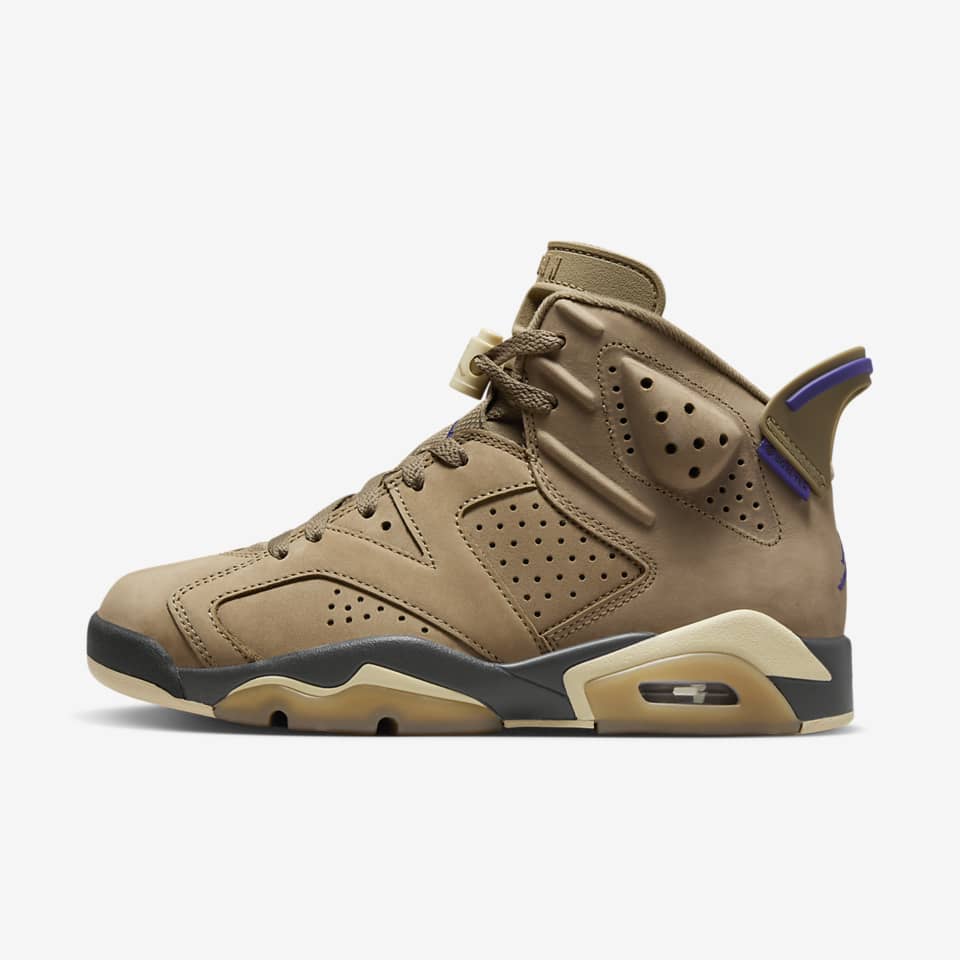
In Stock Brown Air Jordan 6 Retro Sneakers Releases

The Air Jordan 6 represents more than a brilliant design evolution in Michael Jordan's signature line—it's the physical embodiment of perseverance rewarded. Designed by Tinker Hatfield and released in February 1991 for $125, this was the sneaker on MJ's feet when he finally broke through, sweeping the defending champion Detroit Pistons and defeating Magic Johnson's Lakers to claim his first NBA championship. After seven years of playoff heartbreak, the AJ6 became the weapon of victory, forever cementing its status as the trophy shoe that launched the Bulls dynasty.

Showing Products 1-1 of 1 Results

1991: The End of the Curse, The Birth of a Dynasty

For three consecutive years, the "Bad Boy" Pistons had physically dominated Jordan and the Bulls, employing their infamous "Jordan Rules" to brutalize His Airness at every turn. The frustration was mounting. The criticism was deafening. Could the greatest individual talent ever actually win a championship?

Then came June 12, 1991. Wearing the Black Infrared Air Jordan 6, Jordan and Scottie Pippen combined for 62 points, 17 rebounds, 17 assists, and 10 steals to defeat the Lakers 108-101 in Game 5. Jordan averaged 31.2 points, 11.4 assists, and 6.6 rebounds per game throughout the Finals—becoming the first and only player to average 30+ points and 10+ assists in an NBA Finals. When the final buzzer sounded at the Great Western Forum in Inglewood, California, Jordan collapsed into his father's arms, tears streaming down his face. "No one can ever take this away from me," he said through emotion. The seven-year struggle was over. The dynasty had begun.

The Air Jordan 6 wasn't just present for this moment—it was instrumental to it. This was the first title, the one that proved everything. Every championship that followed traced its lineage back to this game, this series, these shoes.

Anatomy of Performance: Porsche Engineering Meets Basketball Innovation

Like all models from the Air Jordan 3 through the Air Jordan 15, the AJ6 was designed by the legendary Tinker Hatfield, who looked to Michael Jordan's Porsche 911 Turbo for inspiration. The automotive influence wasn't mere aesthetic tribute—it was purposeful performance design that addressed MJ's specific requests while creating one of the most distinctive silhouettes in sneaker history.

The Spoiler Pull Tab: Function Meets Form

The most recognizable feature of the Air Jordan 6 is undoubtedly the heel tab, colloquially known as "the spoiler." Jordan himself requested that this design element be placed where it wouldn't touch his achilles tendon—a detail that sounds minor but speaks volumes about Hatfield's attention to athlete feedback. The result is a molded rubber pull tab that echoes the aggressive rear spoiler of Jordan's Porsche 911, creating visual drama while serving genuine utility. The Air Jordan 6 became the first basketball shoe to have any sort of molded structure on the back, establishing a design language that would echo through future models.

Neoprene Bootie with Functional Finger Holes

The pull tab works in conjunction with rubber-lined holes on the neoprene tongue to make the shoe easy to put on and take off—another direct response to Jordan's complaints about his previous signature models. The two-hole system on the tongue provides literal handholds for opening the shoe, while the neoprene inner bootie (continuing from the AJ5) delivers a snug, sock-like fit that enhances lockdown during explosive movements.

This wasn't just clever design—it was problem-solving at the highest level. Jordan was playing 40+ minutes per game in the playoffs; every second wasted fighting with his shoes was a second he couldn't dedicate to dominating his opponents.

Reinforced Toe Box and Streamlined Upper

On the Air Jordan 6, Michael Jordan gave direct orders to have a clean toe, so Tinker Hatfield made sure the AJ VI had a reinforcement around the toe, making this the first basketball model to obtain this feature. The toe box reinforcement provided durability without bulk, allowing the shoe to maintain its sleek, streamlined profile while withstanding the punishment of MJ's explosive first step.

Another unique detail found on the Jordan 6 is via the upper, as the two overlays form the number "23"—a subtle but meaningful touch that Hatfield incorporated to satisfy Jordan's desire to see his number integrated into the design itself.

Translucent Icy Sole with Improved Traction

The Air Jordan 6 was the second model to have the clear rubber sole. When the Air Jordan V was released, many complained that their children were falling because the soles would collect dust on the court, making the sole slippery. Hatfield addressed this by reinforcing the translucent rubber with more solid rubber zones, maintaining the aesthetic appeal of the "icy sole" while dramatically improving court traction. The visible Air cushioning unit provided responsive impact protection—critical for Jordan's relentless attacking style.

The Lace Lock Detail

The AJ6 came equipped with a plastic lace lock—a small but distinctive accessory that allowed wearers to secure their laces at the desired tightness without worrying about them coming undone during play. While often overlooked, this detail became part of the shoe's iconic aesthetic, particularly on retro releases where collectors prize the inclusion of original accessories.

The Last Nike Air Branding

The Air Jordan 6 is also the last Air Jordan to feature Nike Air branding on the heel, a detail that makes OG pairs especially desirable among collectors. From the AJ7 onward, Jordan Brand would remove all Nike branding, making the 6 a transitional piece in the evolution toward complete Jordan Brand independence.

The Complete Air Jordan 6 Guide

How does the Air Jordan 6 fit?

The Air Jordan 6 generally fits true to size (TTS) for most wearers, though there's important nuance depending on your foot shape and fit preference. Recent Jordan 6 releases fit closer to true to size than older versions—for example, the 2019 Infrareds are true to size, while 2014 releases had an especially wide toe box.

The AJ6 is known for its roomy toe box and generous internal volume, which makes it particularly friendly for those with wider feet. If you have narrow feet or prefer a snug, locked-in fit, many collectors recommend going down half a size. However, if you have wide feet or appreciate a more relaxed fit, stick with your standard Nike/Jordan size. The key is understanding that this shoe has more interior space than models like the AJ1 or AJ4, so adjust accordingly based on your personal preference.

Why is the "Infrared" colorway so important?

The Black Infrared colorway holds unparalleled significance in sneaker history—it's the exact version Michael Jordan wore during the 1991 NBA Playoffs and Finals. Jordan wore the "Black Infrared" colorway of the Air Jordan 6 as he averaged 31.2 points, 11.4 assists, and 6.6 rebounds per game in the finals. This wasn't just any championship; it was THE championship—the one that silenced all doubters and initiated the Bulls dynasty.

Every time the Black Infrared retros, it's not merely a shoe release—it's a historical artifact being reissued. The Infrared hits on the tongue, heel, and outsole create one of the most recognizable color combinations in basketball footwear. For collectors and purists, owning the Infrared 6 is owning a piece of championship history. The "Infrared" colorway first retroed in 2000, with the most recent re-release coming in 2019.

What's the difference between the Air Jordan 5 and Air Jordan 6?

While both models share Tinker Hatfield's design DNA and certain features like visible Air cushioning and translucent outsoles, the AJ6 represents a more refined, aggressive evolution. The most obvious difference is the upper construction: the AJ5 featured distinctive translucent plastic netting on the side panels, giving it a raw, technical appearance. The AJ6 eliminated this netting in favor of a smoother, more streamlined leather upper with perforations for breathability.

The shape itself is more sculpted and angular on the 6, emphasizing a forward-leaning, aerodynamic profile inspired by sports car design. The AJ6 also introduced the signature spoiler heel tab and finger-hole tongue system—features the 5 didn't have. Think of it this way: the 5 looks like a fighter jet, raw and mechanical; the 6 looks like a Porsche, sleek and purposeful. The 6 is perceived as more sophisticated, more "grown up" in its design language, befitting Jordan's maturation as both a player and a cultural icon.

Is the Air Jordan 6 comfortable for everyday wear?

For a retro basketball shoe from 1991, the Air Jordan 6 offers surprisingly solid comfort for lifestyle wear. The visible Air cushioning unit in the heel provides responsive impact absorption, while the neoprene inner bootie creates a comfortable, sock-like fit that molds to your foot shape. The shoe offers excellent ankle support without feeling restrictive, thanks to its padded collar and mid-top cut.

That said, this is a 34-year-old design—you're not getting modern React foam or Boost technology. The cushioning is firm by contemporary standards, and the shoe has a break-in period where the leather needs to soften. But for all-day wear, walking around the city, or casual use, the AJ6 is perfectly capable and comfortable. Many wearers report that once broken in, the 6 becomes one of their most comfortable retros, particularly compared to other classic Air Jordans from the same era.

Why do Air Jordan 6 soles turn yellow over time?

The yellowing of the translucent "icy" soles on the Air Jordan 6 is a natural chemical process called oxidation. With time and exposure to air and light, the rubber yellows—this clear sole can easily stain, so it's difficult to maintain freshness. The rubber compounds in translucent outsoles contain polymers that react with oxygen, UV light, and environmental factors, gradually shifting from crystal clear to amber, then to darker yellow or even brown tones.

Interestingly, many collectors view sole yellowing on vintage pairs as a mark of authenticity—it proves the shoes are genuinely old and haven't been artificially "restored." While there are various de-yellowing techniques involving hydrogen peroxide solutions and UV exposure (like "Sole Bright" or "Sea Glow"), these treatments are temporary and the yellowing will eventually return. Some purists embrace the natural aging process as part of the shoe's story. After all, these shoes were meant to be championship trophies, not museum pieces—and trophies are allowed to age with dignity.

What about the Air Jordan 6 "Carmine"?

The White/Carmine-Black colorway holds its own place in AJ6 lore. While it wasn't worn during the championship run, the Carmine dropped unexpectedly in 1991 and showcased the AJ6's ability to handle split colorways—white on the lateral side, carmine red on the medial side. The design allowed for split colorways, like the "Carmines," which dropped unexpectedly like bird shit back in '91. The boldness of this asymmetrical design approach demonstrated the shoe's versatility and paved the way for future creative colorways. The Carmine has retroed multiple times and remains a fan favorite for its clean, striking aesthetic.

Should I size down in the Air Jordan 6?

This depends entirely on your foot shape and fit preference. The Air Jordan 6 is known for having a roomy fit, particularly in the toe box area. If you have narrow feet or prefer your sneakers to fit snugly with minimal internal movement, sizing down half a size is often recommended. However, if you have wide feet or average-width feet and like a more relaxed fit, stick with your true size.

A good rule of thumb: if your standard Nike/Jordan size feels roomy in other models, consider going down half a size in the 6. If your normal size feels snug or you have wide feet, stay true to size. The roominess is actually a benefit for many wearers, as it makes the shoe more comfortable for extended wear and accommodates thicker socks without cramping your toes.

Are Air Jordan 6 Retros identical to the originals?

No retro is ever perfectly identical to the original release, and the AJ6 is no exception. Jordan Brand has updated various aspects across different retro runs over the past two decades. The shape has been refined multiple times—early 2000s retros had a somewhat bulbous, less sleek profile compared to the originals. More recent releases (2014 onward) have gotten closer to the OG shape, though purists still notice subtle differences in the toe box curve, heel cup angle, and overall silhouette.

Materials have also varied: some retros use genuine nubuck or premium leather close to the originals, while others have used synthetic or lower-grade materials. The Infrared hue itself has been slightly different across various retro releases—some brighter, some more subdued. Collectors pay close attention to these details, but for most wearers, modern retros deliver the essential Air Jordan 6 experience: championship heritage wrapped in Porsche-inspired design.

The Trophy at Your Feet


After the game, Jordan, who finished with 30 points, 10 assists, and 5 steals, was in tears with his father and wife by his side. That image—Jordan clutching the Larry O'Brien trophy, his face buried in his father's shoulder, the Black Infrared 6 on his feet—became one of the defining photographs in sports history. It represented the end of doubt, the validation of greatness, the beginning of dynasty.

The Air Jordan 6 is the physical manifestation of that breakthrough moment. Every design detail, from the Porsche-inspired spoiler to the championship Infrared color, tells the story of Jordan's ascension from individual brilliance to championship glory. Tinker Hatfield's design took inspiration from Michael Jordan's Porsche 911 Turbo, which can most easily be seen through the streamlined toe and spoiler-like heel tab—but it was Jordan's performance in these shoes that elevated them from clever design to legendary status.

Wearing the Air Jordan 6 today isn't just about appreciating great sneaker design or collecting a piece of the Jordan line. It's about connecting to the first trophy, the one that made all the others possible. It's the shoe that proved Michael Jordan wasn't just a spectacular individual talent—he was a champion, a dynasty builder, the greatest of all time. That's why the 6 endures. That's why it matters. That's why it will always be the championship sneaker that started everything.